Rethinking the Funding Paradigm
September 14, 2026
An Interview with Haowen Wang, Dance/USA Director of Regranting
BY EMMALY WIEDERHOLT
Dance/USA is a national organization that champions an inclusive and equitable dance field by leading, convening, advocating, and supporting individuals and organizations. One of its granting programs, Dance/USA Fellowships to Artists (DFA), has focused on awarding $31,000 of unrestricted funds to dance and movement artists working at the intersection of social and embodied practices. Created in 2018 with support from the Doris Duke Foundation, the DFA program has awarded 86 Artist Fellows from across the United States and its territories over three rounds of funding. Unfortunately, the program concludes at the end of this year.
From my perspective as an arts journalist, this was one of only a few sizeable and unrestricted grants focused on supporting artists working at the intersection of community-driven practice and social change. I spoke with Haowen Wang, Dance/USA Director of Regranting, with the intention of learning how the DFA program was formed, why it was ending, and what lessons could be learned from it. Instead, I discovered Dance/USA has already been asking questions about the nature and equity of funding, actively seeking to learn from artists about how to create an equitable and accessible funding program, and how to move forward now that the landscape of funding opportunities is shifting.
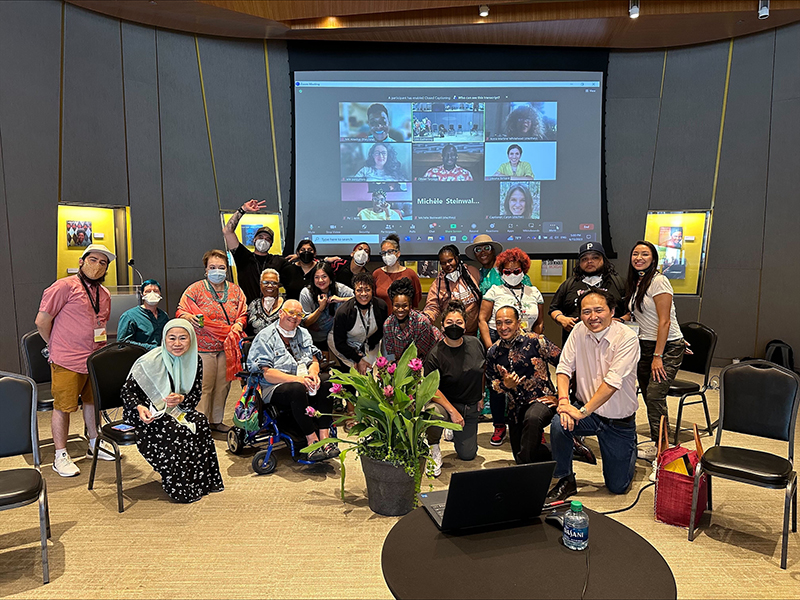
Round 2 DFA Artist Fellows and program team, Photo by Michele Steinwald
~~
Can you share a little background on the Dance/USA Fellowships to Artists (DFA)? How was it created?
Dance/USA ran a past program with funding from the Doris Duke Foundation (DDF) called Engaging Dance Audiences, or EDA. It was an organization-artist community partnership grant that funded the organization as a conduit and provided capacity support for the artist. But the artists often held everything together on the ground in terms of vision, relationships, and coordination. In other words, as it is often seen in institutional support for artists, while artists often held much of the labor of the partnership work, too often they end up at the bottom of the funding hierarchy. At some point a little more than nine years ago, Dance/USA, through its artistic advisors, decided with Duke to change EDA to a direct-to-artist fellowship. It was decided that the program needed to evolve into an unrestricted artist fellowship for community-centered practitioners in dance and movement-based art forms. The award included unrestricted funding and aimed to be a career-recognizing moment for these practitioners, who often get left out of conventional dance funding programs. And DFA was born.
DFA didn’t want to fund studio-to-stage practices; it wanted to fund artists who examine how dance operates in the world and beyond the stage. It wanted to recognize the diversity of lived experiences, bodies, cultures, practices, and dance forms in the dance ecosystem – beyond ballet and modern dance and other culturally dominant modalities. It wanted to be a hub for artists who address social change through dance and movement-based art forms.
It was an extraordinary vision by my predecessors at Dance/USA and Doris Duke Foundation to address funding equity in the dance ecosystem.
In 2020, the first round of DFA successfully acknowledged a group of practitioners at the national level. The program gathered an unprecedented group of artists with incredible knowledge and experience in a broad range of practices.
But it wasn’t enough to figure out who to fund and cut them a check. Part of DFA’s goal is to build community for its Fellows – and Dance/USA struggled with this at first. There were moments of rupture between the artists and us, the institution. Many of the artists chose to push back against the program, from how the resources of the program were spent, how program language was used, and how the agenda was set, just to name a few. If you have a radical vision, but your institutional container can’t keep up with the practitioners you gather without combusting, then it’s time to examine the container.
At the point I came into the program in 2021, that seemed like the most urgent work to do. How do you build care into program structure? What does it actually look like to decenter yourself as the institution and center the artists? How do you model access and equity? How do you design the program through sharing real agency? These are the key questions that DFA worked on in the past five years.
What was the program’s impact on the field?
Offering $2.8 million in unrestricted awards to 86 dance artists who focus on community-based practices is, in and of itself, an important impact. This should be highlighted in this time when funding programs are ending.
Out of the 86 Fellows, there are 16 disabled artists, 19 Indigenous artists, 5 trans artists, and 21 Southern artists. Nearly 95 percent of the Artist Fellows identify as BIPOC. It has been important for us that we fund artists with lived experience and first-person perspective as a member of the communities in which they work. So there is a tremendous amount of effort in participatory design, access, and equity work that is behind these stat lines. The diversity and depth of reach should be highlighted as an important impact of the program.
And, as such, modeling a structure on how to work equitably with artists is another key impact for the program. One of the things we did in DFA was we gave three-year contracts to two artist advisors and paid them to advise us on all aspects of the program in a leadership role. They are part of all decisions from budgets to design, from implementation to evaluation. More than 90 percent of the people who work on the program – panelists, coaches, administrators, and consultants – are artists who are in the community of practice. We then developed phases of iterative feedback processes with the artists, struggled through, and adjusted in real time.
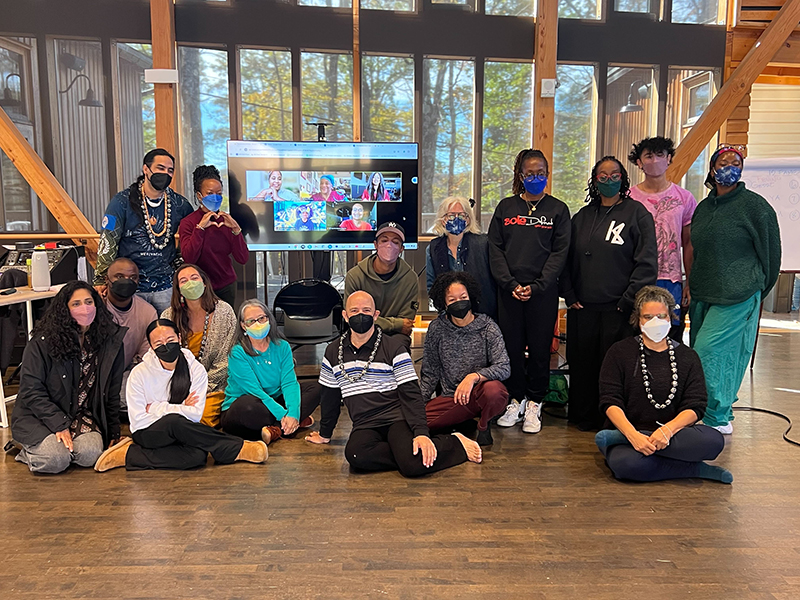
Round 3 DFA Artist Fellows and program team, Photo courtesy Dance/USA
Why is the program closing?
The funding is ending.
Doris Duke Foundation has been a key funding partner of Dance/USA’s regranting programs for nearly two decades. It has been a collaboration that has fueled major field initiatives. It should be highlighted that part of DFA’s extraordinary vision discussed earlier was incubated closely with Duke.
As this funding concludes at the end of 2026, the program will end.
What is the plan for sharing learnings from the program with the field?
The important context here is that we are in the middle of an intentional and systemic shift in arts philanthropy and its strategies to support the field. And more broadly, it is my personal opinion that we are in a new culture war where the arts, the nonprofits, and many of our most vulnerable communities are attacked or dismantled as part of an oppressive political strategy. So, we are in a moment where the existing support infrastructure for the arts through the nonprofit system is severely contracting – and the reasons are layered.
We know that many cultural communities have long been saying that the paths to operate in this system are unsustainable and often harmful to them. Change has been slow, despite the strong institutional rhetoric across our sector.
How do we end a program and share the learnings in a moment like this?
First, this shouldn’t be all about what the program has accomplished. There are many aspects of the program that we feel were unconventional in terms of grantmaking methodology. But we do not assume that the foundation that the program is built upon – that is, a merit-based grant program with an open-call submission and peer review process – still ought to be the default structure that we all continue to learn about in this moment of systemic shift. So, we will be selective about how much we talk about the past.
Second, the core learnings will come from the artists. We’re taking the relationships that this program built in terms of the Artist Fellows as a valued infrastructure. As such, we are gathering a group of DFA artists selected from the past three rounds and asking each of them to contribute to the final reporting. We’re asking the Fellows, “Is there somewhere we need to go?”
Finally, the process is emergent. Over the years, DFA has developed a methodology around gathering artists without predetermining what the gathering should produce or mean. We believe that if we detach product as the end-all be-all of a process, we can allow value and meaning to more fully emerge. So, while there are curiosities around “where we need to go” with the artists, we will let the artists decide how they want to use the gathering time and if they want to shape an outcome and output together.
In early 2027, we will share the report with the field. The report will conclude the program.
It feels like there is movement away from funding art for social change. From your vantage point as Dance/USA Director of Regranting, what does the future of social justice-driven art look like?
I don’t know what that future looks like. But what I do know is that this moment is not limited to art and social change. The shift seems broad and systemic.
What I hear the DFA Artist Fellows say is that it’s been very difficult to sustain practice and structure. For many DFA artists, this has meant relocating, refocusing, or self-funding in order to continue. In many cases, reducing operations or fundamentally rethinking organizational models is already underway.
Most importantly, I hear from the artists that this is a moment of survival. And we as institutions need to think sustenance before we think impact. We need to think care before we think design.
What’s next for Dance/USA in terms of supporting artists who work in the realm of social change?
I will be leaving Dance/USA as DFA concludes at the end of this year. I am excited about the new leadership that Michele Kumi Baer brings to Dance/USA as the new Executive Director. I am hopeful that the lessons from DFA can contribute to her vision for the future of this organization.
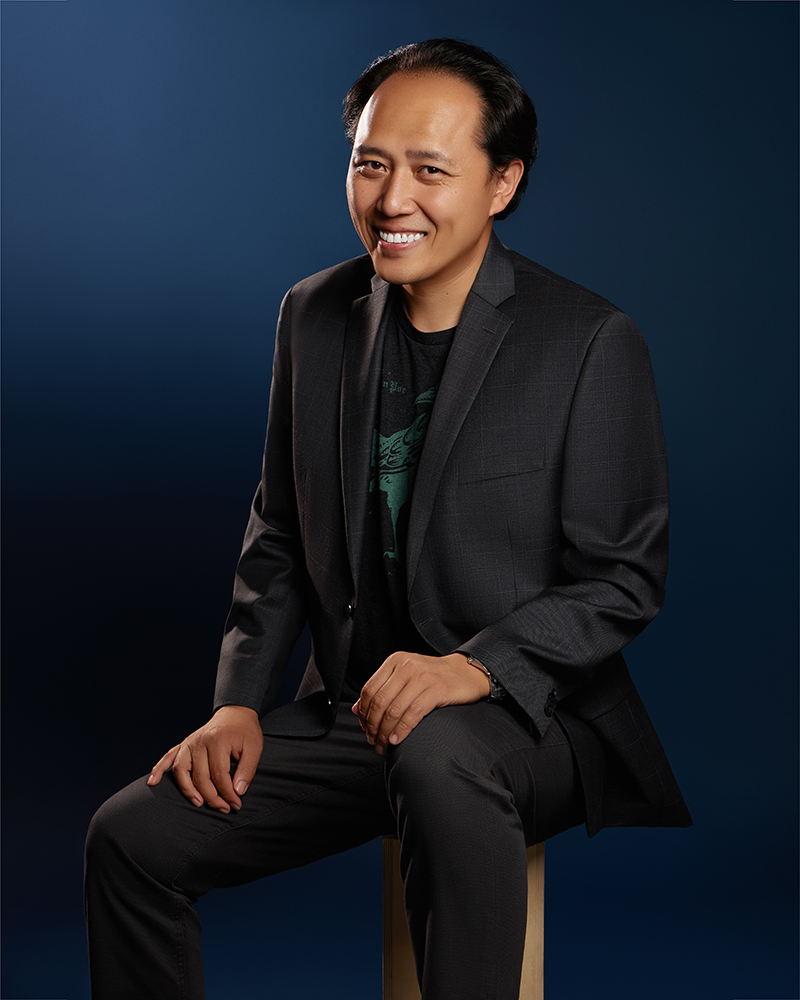
Haowen Wang, Photo courtesy Haowen Wang
~~
Learn more about the Dance/USA Fellowships to Artists program at www.danceusa.org/danceusa-fellowships-to-artists.
Responses
Thanks for sharing Arthur!
I am so grateful to Dance/USA Fellowships to Artists (DFA)! It gave and because of that still gives to me the opportunity to continue to serve a community I know is in need of creative space. Artistic practices that center the body as the primary form are especially in need of physical space to thrive. With this fellowship I am proud to tend to a space my community continues to gather in. Creative ideas fly when different communities intersect and DFA has been giving to that transformative effort! I am also so grateful to Haowen Wang in his championing of that effort! It’s unfortunate the program will be ending. The powers that be should know that because of the nature of this particular inititive the legacy of this effort will live on in the very idea of it. Arthur Avilés