Connecting Intergenerationally through Performance
October 26, 2026
An Interview with djassi daCosta johnson, Artistic Director of Dances for a Variable Population
BY EMMALY WIEDERHOLT
djassi daCosta johnson is a dance artist, choreographer, filmmaker, and writer based in New York City, as well as the new Artistic Director of Dances for a Variable Population, a multigenerational dance company and educational organization. Founded by Naomi Goldberg Haas in 2005, Dances for a Variable Population offers free accessible classes, workshops, and performances in order to empower creativity, improve physical and mental well-being, and strengthen social connections. Here, djassi shares how her background prepared her to step into this role and how she is excited to carry forward and grow Naomi’s legacy.
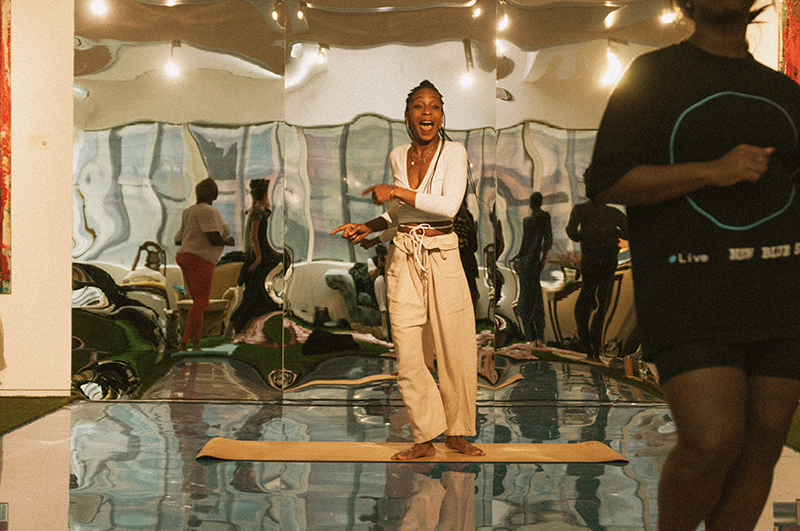
Photo courtesy djassi daCosta johnson
~~
Can you tell me a little about your dance background? What shaped you as an artist?
I am a born and raised New Yorker. I grew up doing Capoeira from the age of four and then followed my brother around as a break dancer and house dancer until I was in my teens. I grew up in street and cultural dance.
My parents are educators: my father was a Professor of Sociology, and my mom was a Montessori teacher. I let them know I wanted to dance, but they had four young kids they were putting through private school. They met during the civil rights movement. My dad was a SNCC Freedom Singer; my mom volunteered with the People’s Free Food Program through the Black Panthers. I grew up going to demonstrations and was very aware that a brown girl like me decades before didn’t have the opportunities I had. Education was paramount in my household.
My seventh-grade English teacher, Mr. Melvin Jones, had just retired from Alvin Ailey. He decided to teach dance as PE. My first choreography that I performed was with Mr. Jones as my partner doing Wade in the Water from Revelations. He told my mother she needed to get me into dance class, but she couldn’t afford it. He told her that wherever I auditioned, I could study for the summer on scholarship, so I did just that at Clark Center, Ballet Hispanico, and Harlem School of the Arts. I was on fellowship at Alvin Ailey for seven years. I did a lot of apprenticing in dance companies during college. I’m cognizant about the importance of arts access. It shaped my career and who I am as a person. Scholarship programs are how I studied dance.
My undergrad was not in dance; it was in Anthropology with a concentration in English from Barnard. I interned at Vibe and Essence magazines while I was apprenticing with Bill T. Jones. I was very interested in using my voice and writing. The dance world doesn’t want you to do that, so I experienced some tension in the studio. I was able to express myself with writing in the editorial world instead.
After touring with MOMIX, I lived abroad in Brazil and then in Italy working on TV and film. I came back to New York pregnant after almost nine years away. I decided to do more independent art and go to grad school for dance on film at NYU Tisch. I was very aware, touring the world and dancing in proscenium theaters, that who gets to see dance is limited. Screen is more of a forever medium, so I got into creating my own dance films and documenting artists. I’m working on a film called Legends Among Us. I wrote a historical profile about Dance Theatre of Harlem for Kinfolk Magazine in 2016, and Virginia Johnson, who was the artistic director at the time, asked if I would write their playbills. I realized I had this proximity to dance legends I wanted to speak with.
Another aspect of my work that’s important is I’ve been a doula for 23 years. I trained “old school” with an auntie who was a midwife, going to postpartum appointments, and that’s how caretaking and wellness came into my work. I partnered with La Leche League in Italy. During COVID, I went even deeper. I got into herbs and specifically mushrooms and their regenerative properties. I created a community class called Mycelium Movement.
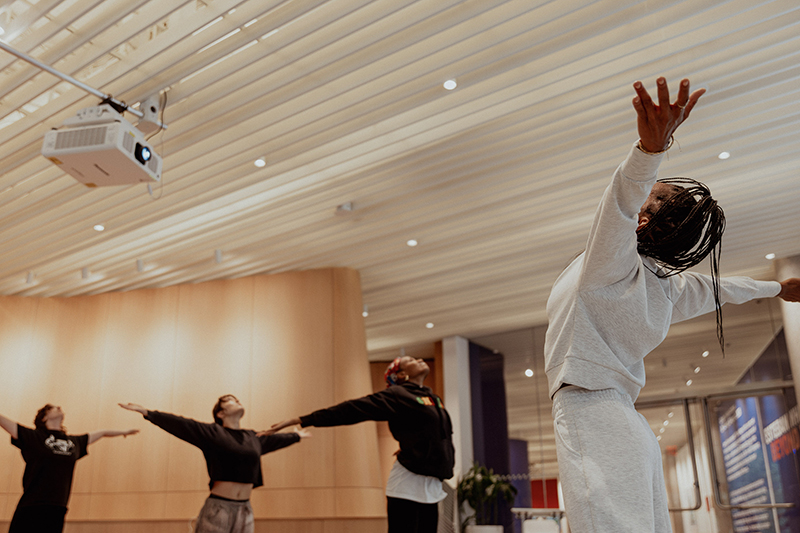
Photo by Laila Annmarie Stevens
What attracted you to the position of Artistic Director of Dances for a Variable Population?
It was more the organization than the position. In the past five years, it became important for me to lead a community class, so I started teaching my Mycelium Movement class for free or by donation in the park. It wasn’t just about movement and health, but more about emotional wellness and transmutation.
When this position was sent to me by several colleagues, it wasn’t just going into senior centers that interested me, but the exhilaration of performance and the opportunity to connect intergenerationally through performance, as opposed to just offering fitness or movement classes. There’s something about being seen in performance and creating in community that is vital. I feel like I’ve been led to this position by a lot of the work I’ve been doing, including my film Legends Among Us, giving people a voice and a platform to tell and dance their stories.
Are there any new directions you’d like to take Dances for a Variable Population in the future?
It’s more about expanding upon the foundation Naomi has built. The main new direction is actively involving preprofessional students in programs I work with around New York, like Joffrey, Brooklyn Ballet, and others like Ailey and Juilliard. Could we make their participation part of their course credit or choreography projects? A student could have a moment in performance with someone who could be their grandmother.
I also want to see DVP at Lincoln Center, more touring to other senior centers, and expanding the practitioner training to reach more teachers who want to work with aging populations. I’d like DVP to train teachers from other states beyond the tri-state area. DVP held a training about a year and a half ago called Moving Minds about how to actively work with the emotion of movement, which can include people with Alzheimer’s and early onset dementia. I’m interested in expanding our trainings so people can take DVP’s model to other states — even internationally.
DVP’s Executive Director Navarra Novy-Williams and I just went to the United Nations General Assembly Healing Arts Week, and one of the consistent conversations was the importance of access to arts and health for everyone. There were some statistics that by 2030, over 20 percent of the US population will be over 65. This is phenomenal, because it means we’re doing better in terms of maintenance of our health. But how do we expand arts services for this vibrant population that happens to be over 65? How do we give those people opportunities to perform and express themselves? DVP is one of those platforms that validates older populations by giving them classes, community, and performance opportunities.
Why is it important to continue to create spaces for older dancers and dancers with disabilities to learn and perform?
It is more important than ever to bring people together and to cultivate joy. After the pandemic, we see that we’ve been in this culture of isolation and loneliness. One of the things that DVP does is speak to the loneliness epidemic that is happening to everyone but especially older adult populations. Our students come every week to class and form community, and then they get together outside of the classes and performances. It’s in defiance of what we’re being fed right now, to feel despair. What is it like to cultivate joy and perform it?
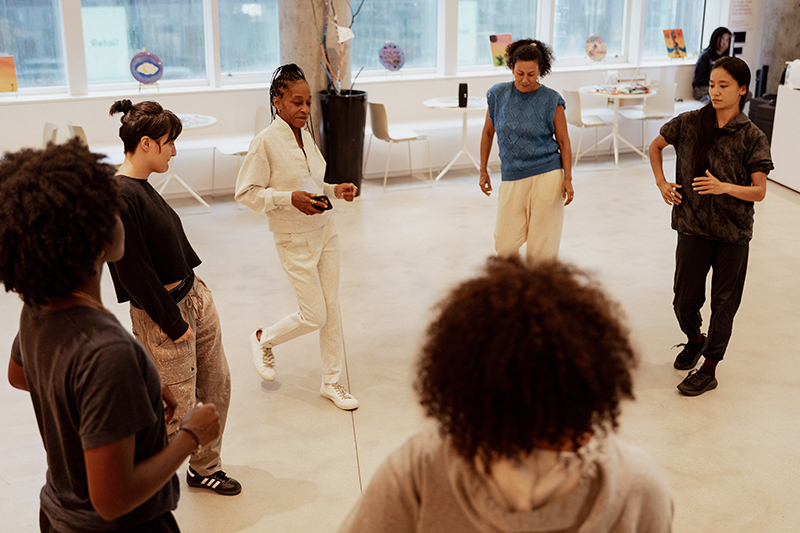
Photo by Laila Annmarie Stevens
What’s next for DVP? Do you have any upcoming projects or focuses you’d like to share more about?
We’re wrapping up REVIVAL 10: Retrospective, which is a retrospective of Naomi’s favorite pieces over the past 20 years. We’re focusing on a small capsule performance that will take us through the holiday season called The Golden Tour that performs in senior centers. In January is our practitioner training. Then there’s the first performance series that I’ll be choreographing in and curating. I’ll be bringing in guest artists, including two well-known and accomplished dancers, one in her 70s and one in her 90s. I’m looking forward to my first season as artistic director.
Any other thoughts?
My first order of business was to start applying for grants. DVP just found out we received a small grant from the Department of Transit called Trick-or-Streets. We’ll be doing an intergenerational reimagining of Thriller with grandparents and kids (and all the in-betweens) during a free three-hour workshop outdoors in Harlem. It’s called “Still Thrilling” and it’s a great opportunity for active choreography and exchange.
~~
To learn more about Dances for a Variable Population, visit www.dvpnyc.org.
Responses
There are no comments at this time.
Be the first to start the discussion by filling out the comment form.