The Power of Recovery in Motion
August 10, 2026
An Interview with Octavio Campos, Facilitator of Recovery in Motion
BY EMMALY WIEDERHOLT
Recovery in Motion is a program of Pioneer Winter Collective in Miami, FL. A weekly creative space led for people engaged in 12 Step programs or similar addiction recovery journeys, Recovery in Motion sessions use movement, theater, writing, and sound to explore themes like trust, willingness, surrender, and joy. Here, facilitator Octavio Campos shares how Recovery in Motion started, how it complements traditional recovery programs, and why dance as a movement practice is uniquely equipped to aid in the addiction recovery process.
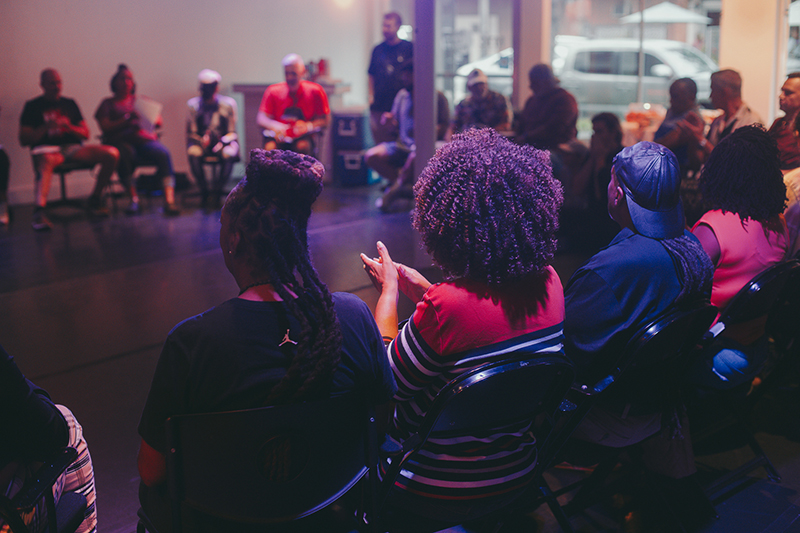
Recovery in Motion, Photo by Passion Ward
~~
How did you get into dance and what has most shaped you as an artist?
I came to dance in my teens in Miami. It quickly became a language to help me understand the entire world. Dance made the world really big. My first entry to dance was experimental and modern.
I trained formally at SUNY Purchase and did the New York thing. I was a Martha Graham ensemble member making $200 a week. I was dying. I did a lot of cattle calls back then. I did one which took me to Germany.
I dropped into the dance theater world in Germany in 1989. I fell in love and started doing dance theater in the lineage of Pina Pausch. Three months after I was in Germany, the wall of Berlin came down. This little contract I thought would last for four months ended up lasting 14 years. My dance practice became very Euro-centric.
I moved back to the US and evolved my practice here with my own work. I’ve explored the dance theater space and what happens beyond the stage. I also worked as a cook. Because of my fall into addiction, I pulled myself out of it by working in recovery doing somatic work. I became a certified peer recovery specialist. I learned about psycho drama, which is a practice done in dance theater, working with your own pain to bring it out and finding the “why.” I got involved with spirituality and that became part of my movement practice. I’m now studying Buddhism. All this – food, community gathering, dance, composition, immersive arts, spirituality – is where I’m living now. Today I think of choreography less as arranging movement, and more as arranging transitions for transformation.
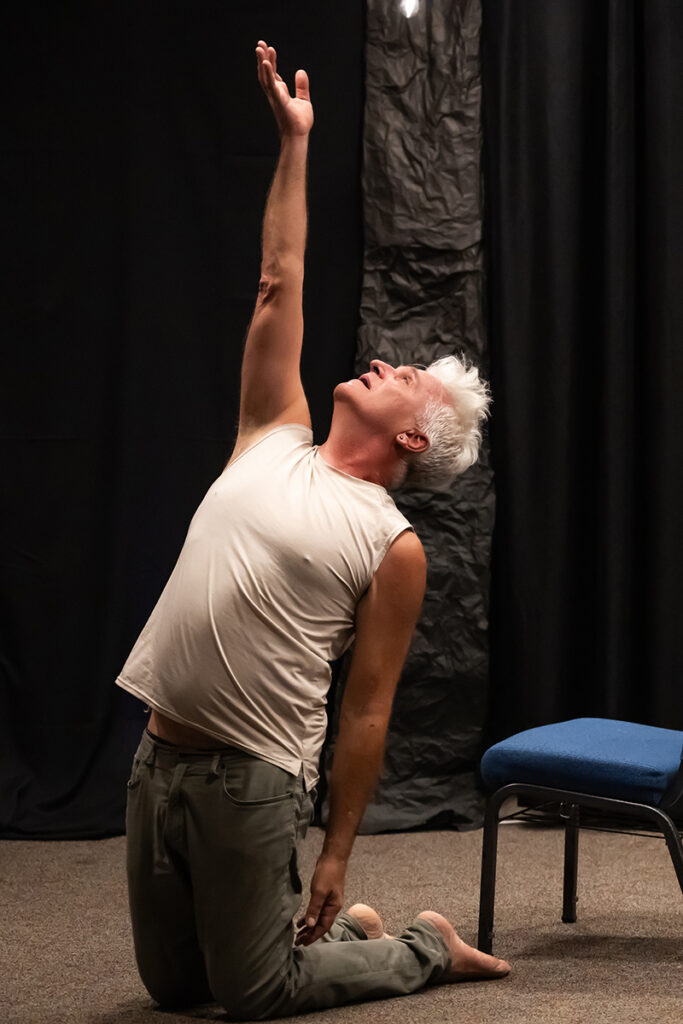
Octavio, Photo by Lisa Nalven
How did you get involved with the Pioneer Winter Collective?
Pioneer had always been this young man surrounding my work back in the day. I was doing a lot of queer performance. He was always in the background buzzing around. I wondered who this 19- or 20-year-old kid was. I had this program I curated in Miami, and he applied. I ended up producing his first one-man show when he was 25. I quickly fell in love with him and the way he challenged ideas about dance, aging, disability, queerness, and community at such a young age. After his solo, it became clear we shared a lot of the same values. We both believed that dance could be a social practice, not just a performance practice.
Through the Pioneer Winter Collective, I’ve had the opportunity to build community programs with him. We started working on the piece Apollo [a dance-theater work that explores intergenerational queer dynamics, memory, HIV/AIDS, and legacy]. It was my first time working with him as a performer. I was in my recovery process. I thought I would never dance again. I was in Santa Fe and Peñasco, NM, working with Wise Fool and Meow Wolf. I was in the throes of addiction. I disappeared, and Pioneer was always reaching out. He slowly lured me into the Apollo project.
What was the impetus for Recovery in Motion?
When I came back into the fold, there was this woman in the collective, Andréa Labbée. She did this solo that was about her recovery journey. At a 12 Step meeting, there is always a lead who tells their story of experience, strength, and hope to the fellowship. In a recovery meeting, you’ll come in, sit down, and there are readings about what the program is. Someone will share their story for 20 or 30 minutes, and they are the lead speaker of the meeting. They will sit in front of the fellowship and share what they did, how they got out of it, and what they are doing now. Instead of speaking, Andréa created a lead in the form of a dance theater work with dance, music, and poetry. She told her story of addiction and recovery and what she’s doing to maintain her recovery as a dance theater story. I watched it and thought, “How cool is this? Why can’t we have this more often instead of what I call trauma porn, where people spill their guts.” I sat with Pioneer and Andréa, and we birthed this program called Recovery in Motion, which is now in its third season.
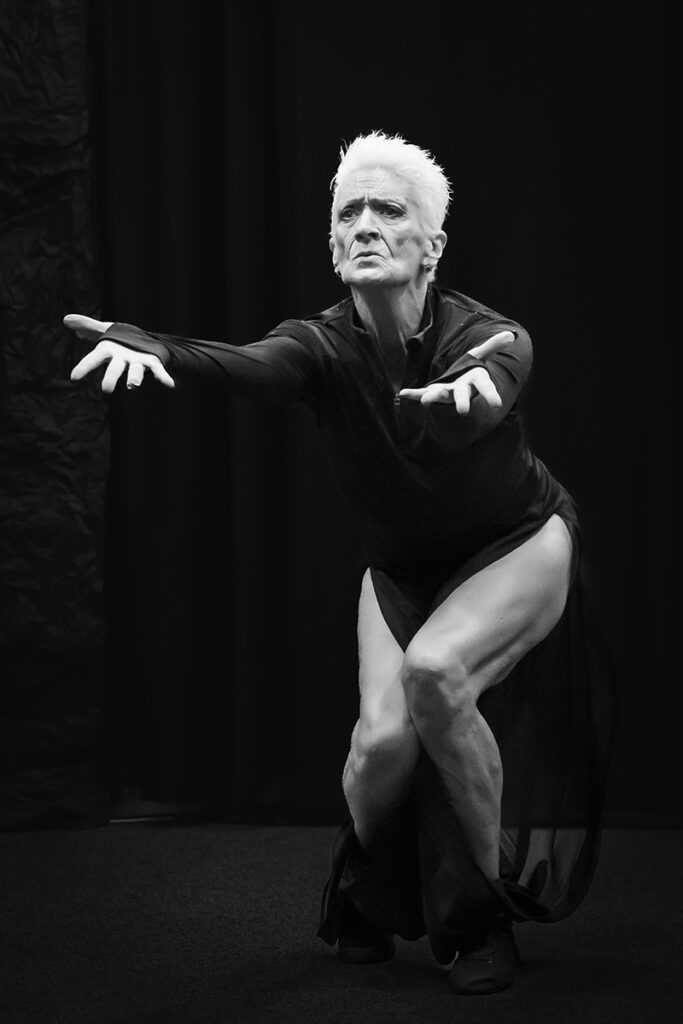
Andréa Labbée, Photo by Lisa Nalven
How would you describe the program to someone unfamiliar with it?
The program is free and there’s no sign-up. We promote it via recovery channels, WhatsApp groups, and word of mouth. We also promote it in what we call Alano rooms, or rooms where recovery meetings take place. They are in basements of churches, usually not very pretty spaces. They are bleak and full of trauma.
So, we moved it into a dance studio. Let’s change the environment. People come in, there’s music playing, there’s food on the table. It’s clean with a big open floor. We have folks coming in from homeless shelters, outpatient, folks with ankle bracelets, folks from recovery centers. We have a wide range.
The program is an hour and a half. We begin by gathering in a circle and doing a classic clinical check-in: name, pronouns, how you’re coming to the circle. After we do an introduction, we do a preamble about what Recovery in Motion is. We tell them it’s a space for healing, for folks to come together, and for people to share their experience, strength, and hope through their body.
Since everyone is sitting in a chair, we start with a chair warmup. We bring everyone to their feet and start doing somatic exercises and group movement. We build the class up. Sometimes we even do a combination to a song. We build it up like a dance class. Then we turn it into dance theater task-driven exercises that generate choreography. Before you know it, everyone is dancing, exhausted, laughing sometimes, crying sometimes, and having fun. At the end we do a check-in where people can process what has happened. We end with a meditation or grounding exercise. There’s food, so people stay for another half hour.
My superpower is getting people to do things they wouldn’t normally do. I have a way of making people comfortable very quickly. I bring 40 years of experience in these kinds of spaces. It’s my power on this planet. I hold a large container and give people a lot of permission. I put myself out there too, and I let them use their voice.
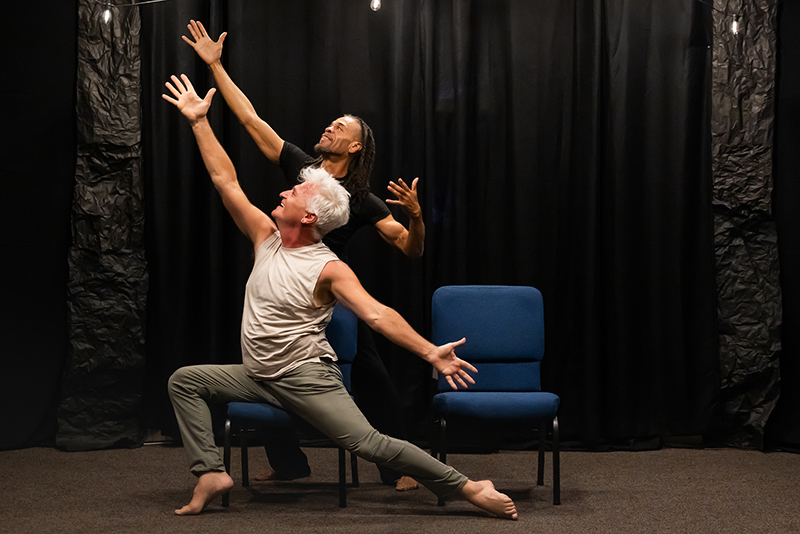
Octavio with Darryl Brown, Photo by Lisa Nalven
Being in recovery, we’re looking for the why: Why did we try to hurt ourselves? It’s not just addiction to substances; it’s addiction to destructive behavior. Once we understand why we’re doing this, then we can start the healing process. Otherwise, we’re just white-knuckling and pushing through.
The cycles run weekly for 12 to 14 weeks. We end with a final party or celebration. In that final gathering, we always end with some kind of performative element. People have created choreography, little performances, spoken word, things they want to share. They invite their families. It becomes a community celebration exchange.
There have been seven sessions so far. We’ve had a couple of participants step into leadership. The team is growing and we’ve expanded to the next county over from Miami-Dade. There’s even a group in New York that read about us and wants to adapt our process for their program.
Are there one or two impactful experiences you’ve had with Recovery in Motion you can share?
We realized early on that for this program to work, we needed to partner with recovery centers and different recovery groups. The Miccosukee Indian tribe, which suffers from serious addiction problems, signed on to Recovery in Motion. Camillius House, which serves homeless people, signed on to Recovery in Motion. The B. Riley House, which is an LGBTQ sober house, signed on for Recovery in Motion. We had all these groups together in the same room. I realized that addiction was what brought us all there, but we were working together in harmony. The most magical sessions were when all the attendees were creating choreography and having joy together. We shared the space and everyone felt safe and seen and left with hope.
Why are programs that address addiction and recovery through the arts, and specifically through dance, important?
I don’t think the arts replace medicine or traditional recovery programs. I think we have to think about them as a complement. Recovery isn’t about stopping harmful behaviors. It’s about rebuilding a meaningful life. Art and dance can help people imagine that life and what it can be. We’re always in our heads in recovery. When you can feel it in your body, it’s a real complement to talk therapy. The arts and dance allow us to express curiosity in a way talk therapy doesn’t. It’s about connection instead of isolation. Dance and the arts give us a way to process experiences that don’t always have words. Dance is especially powerful because addiction lives in the body as much as it lives in the mind. I always say trauma is disguised as pain. Movement gives access to those places in ways that conversation alone sometimes can’t. Ultimately, Recovery in Motion isn’t about dance. It’s about remembering we’re still creative, connected, capable of joy, and worthy of belonging.
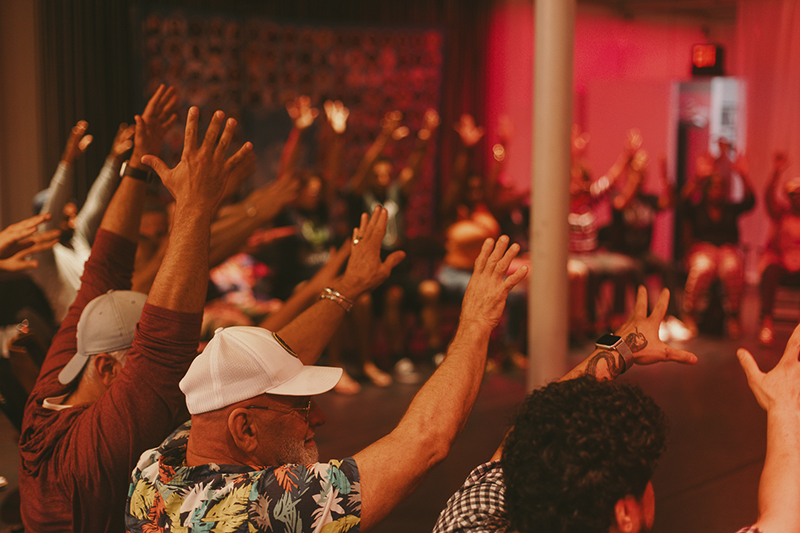
Recovery in Motion, photo by Passion Ward
~~
To learn more about Recovery in Motion, visit pioneerwinter.com/recovery-in-motion.
Responses
There are no comments at this time.
Be the first to start the discussion by filling out the comment form.