Telling Stories Through Dance for 40 Years
July 27, 2026
An Interview with Ronald K. Brown
BY EMMALY WIEDERHOLT
Ronald K. Brown is a legendary choreographer based in Brooklyn, NY, and the artistic director of EVIDENCE, A Dance Company. EVIDENCE recently celebrated its 40th anniversary. Here, Ronald reflects on how he found his way into dance, when the company grew and achieved acclaim, and why he’s passionate about grooming the next generation of dancers.
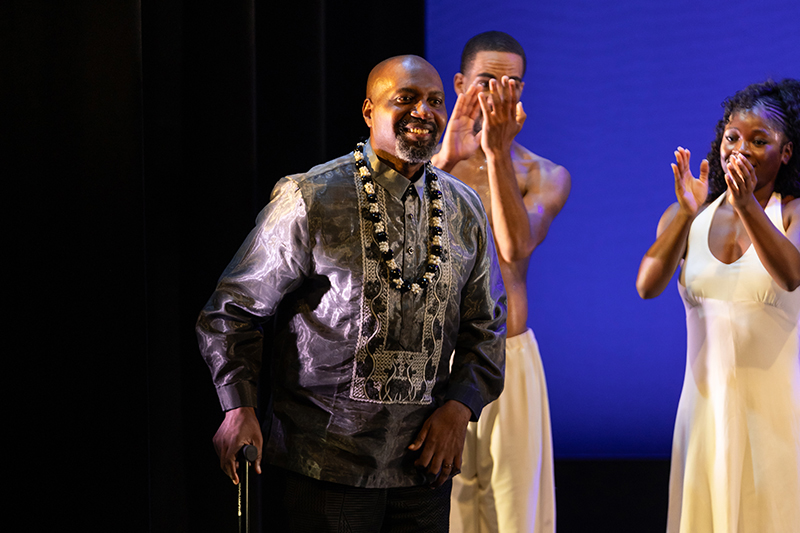
Ronald K. Brown, Photo courtesy EVIDENCE
~~
How did you get into dance and what most shaped you as an artist in your early years?
I was born and raised in Brooklyn, NY. My mom said that I would not sit still. If there was music playing in the house or in the supermarket, I was always dancing and moving. She couldn’t keep me still. Then when I was in the 2nd grade, I went on a school trip to see Alvin Ailey American Dance Theater. I came home and made a dance. I started making up dances and having my family watch these performances… including making programs. I would cut up pictures from the family album.
My mom said, “I know there’s dance at the Bedford Stuyvesant Restoration Corporation,” which is the oldest community development corporation in the US. It’s in the neighborhood where I grew up. She brought me there. I told her there were 80 girls. There weren’t, but it felt like there were 80 girls. I fought her for many years. In high school, she tried to get me into a dance school, but it didn’t work out. She tried to get me to go to a summer program at the Dance Theatre of Harlem when I was 12 years old. I said maybe this dance thing is not for me. I focused on creative writing. I thought I would be a playwright. I went to a communication arts high school in Brooklyn and started doing musicals. My mom said, “Boy I know there’s dance there,” but I told her I was a writer. I got a scholarship for journalism.
There was a small dance school in lower Manhattan called Mary Anthony Dance Studio. I auditioned for a partial scholarship. For the Graham technique section, they wanted me to round my back in a contraction. I had no idea what they were talking about. I was 16 years old. But I told my mom, “I’m going to give up my journalism scholarship and figure this dance thing out.” She said, “Boy, I told you so. Get a job and learn how to dance.”
I lucked out. I got a job in a check processing department at JP Morgan Charity Trust. I worked the graveyard shift so I could dance. I worked from midnight to 7 a.m., got breakfast, and then went to Mary Anthony Dance Studio. I took five classes a day. After two years, I said, “I think I’m going to start a dance company.”
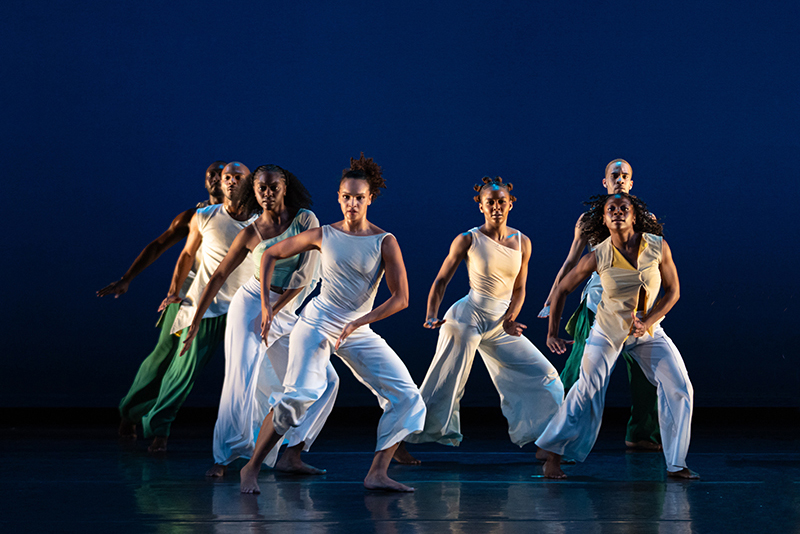
Torch by Ronald K. Brown, Photo by Quinn B. Wharton
What was the impetus for starting EVIDENCE over 40 years ago?
The first concert of EVIDENCE was in June 1985, a month before I turned 19. This was the early 80s, and I was looking around at what the dance world was. I thought modern dance was about real people. I was so confused by what was going on. A big brother in my circle of young Black writers was writing about legacy. He said to me, “You love dance. Maybe your work is in dance. We have the writing. But we need to leave proof that we were here.” That’s how I got the name EVIDENCE. Who’s going to tell my grandmother’s stories? I can’t be mad at the dance community for doing something I don’t understand. I wanted to start a company to show real people on stage and share our stories with the world. That’s how I was precocious enough to start a company when I was 18 years old.
My mom gave me a couple hundred dollars and my grandmother also gave me some money to do my first showcase. The dancers in my first piece were other dancers from Mary Anthony and a friend from high school who was dancing at Brooklyn College. People believed in this young boy.
Another big brother in the dance world told me, “Ron Brown, please go get on scholarship somewhere. I know you have a dance company now, but can you still train?” So then I got a scholarship at Jennifer Muller/The Works. One year later, I was able to audition for her company. I danced for Jennifer for two years.
What are one or two pieces from your career to date that you are most proud of?
In 1994, the company was invited to perform in Lyon, France, at a biennale. I had taught a lot in Korea, but hadn’t taught in Europe yet. It was amazing to have my company there. Anna Kisselgoff, who wrote for the New York Times, reviewed the concert under the title “Ron Brown: A New Storyteller.” I was like, “What? How did this ballet woman find me at this festival in France?” That was a big milestone for me and the company.
When I was working at Jennifer Muller/The Works, Judith Jamison came and set a work. We became colleagues and friends. I invited her to a concert of my company at a small church in the East Village. She came and asked me for a video of my work. She was running The Jamison Project at the time. I told her I didn’t have a video or a TV. When she got to the Ailey Company, she saw a piece I had put on Cleo Parker Robinson’s company. She said, “Ron, please, I want to introduce your work to the board. Can I get a DVD of your work?” I said, “Okay, now I have something for you.” So, in 1999, I choreographed Grace on the Ailey company, the first of several pieces I’ve put on the company. I thought about me as a boy, afraid to take a dance class. How did I end up with this opportunity? Grace was the first thing that came to mind.
That was also the first year I got a booking agent and a board of directors who could raise money. 1999 was a magical year for EVIDENCE. For so long, I believed that I had to make a space for EVIDENCE, for work about liberation and perseverance. I had to hustle. I was teaching everywhere. At one point, I was teaching in Norway for eight weeks for another company. I finally asked myself, “Why are you teaching for another company?” At that point, I stopped teaching outside the country to raise money for my own company. I love teaching, but I realized I had to sacrifice in a different way and not groom other dancers.
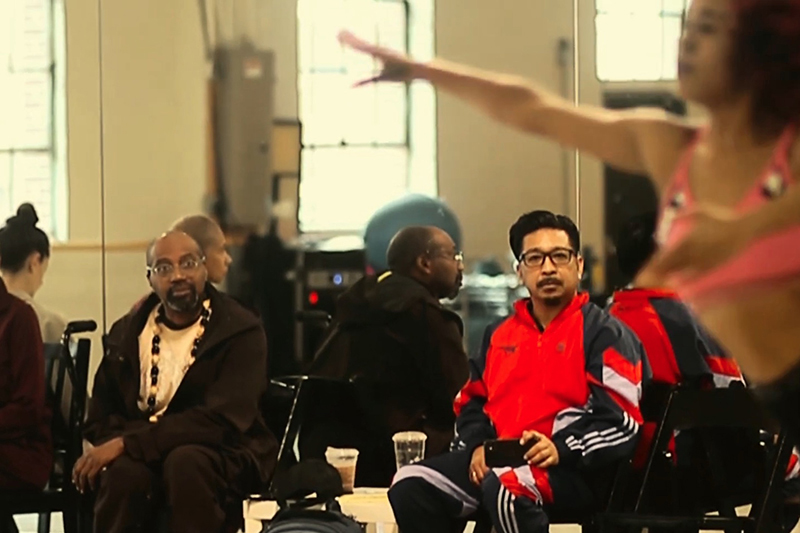
Ronald K. Brown and Arcell Cabuag, Photo by Micah Isaiah
I understand that mentorship is important to you. What are some ways you create educational opportunities?
The Bedford Stuyvesant Restoration Corporation where I took my first dance class is where EVIDENCE has been in residence for over 20 years. They have a program called Youth Arts Academy. My partner Arcell Cabuag has become the director of education for the whole school, which includes dance, drumming, and drama. He and I have been directors of the preprofessional training program for seven years.
One year, we had a young dancer named Xavier who was taking the EVIDENCE summer intensive. In order to join the preprofessional program, kids had to be 12, but Xavier was 10 years old. He told me at the end of the summer, “Mr. Brown, I want to audition for the program because I want to train with you.” We changed the age so we could accept him. Xavier just turned 17 and is a gorgeous dancer.
Grooming these young people is so rewarding. We make them global citizens. One student just graduated from Temple University and is going to apprentice at EVIDENCE. One dancer joined the navy. We have a dancer who is doing community engagement for one of the council members in Brooklyn. We have a nurse. It’s so incredible.
We have six boys in the program right now. I just love that we can be role models for young boys. The fear I had, they don’t have it.
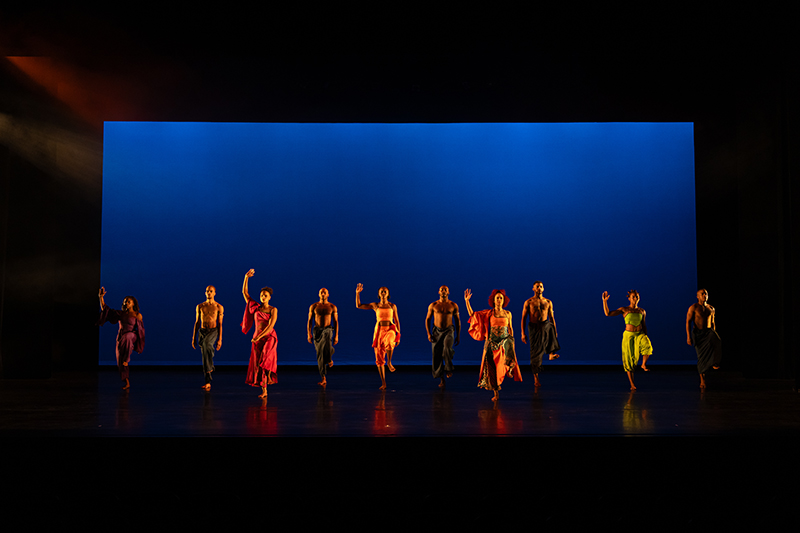
EVIDENCE at the Billie Holiday Theatre for its 40th Anniversary, Photo courtesy of EVIDENCE
What are some of the biggest ways you’ve seen the dance world change or evolve over the past four decades, for better or for worse?
I don’t want young people doing dances with vulgar names. I’m glad there’s dance everywhere, but let’s take care of what’s appropriate for young people and what’s not. I would love for dancers across the spectrum to acknowledge that some dances are not appropriate for children or elders, that dance has a dignity. I want to make sure we have a space for dance that’s for everyone. That’s why Arcell and I make dance spaces that are intergenerational with everyone dancing together in one room with respect for one another.
What’s next for you? Do you have an upcoming project or focus you’d like to share more about?
EVIDENCE’s summer workshop series starts August 10th. I’m so excited about that.
I choreographed Grace in 1999 and the companion piece to that, Mercy, in 2019. I’m working to make a trilogy with the final piece called Faith. It will premiere in the Spring of 2029. Right now I’m just looking for music, but I’ll apply for residencies to create the piece on EVIDENCE over the next two years.
Any other thoughts?
I’m grateful that it’s been 40 years. I’m turning 60 in July. As the universe would have it, I’m teaching composition for graduate students in Jacksonville, Florida in July. Then Arcell and I will spend some time in Florida. After my birthday, I’ll be back and teaching all ages at EVIDENCE’s summer workshop. The age range is from six to 86!
Upside Down by Ronald K. Brown, Photo by Quinn B. Wharton
~~
To learn more about EVIDENCE, visit evidencedance.com.
Responses
There are no comments at this time.
Be the first to start the discussion by filling out the comment form.