Is Concert Dance Dying?
June 22, 2026
An Interview with Joe Landini
BY EMMALY WIEDERHOLT
When I danced in San Francisco from 2008 to 2013, the venue where I most performed was The Garage, a small black box theater run by SAFEhouse for the Performing Arts and directed by Joe Landini. The Garage was a hub for choreographers and performers because, through its open residency programs, it gave free space to rehearse and perform.
SAFEhouse was founded in 2007 and has been housed in four different venues around San Francisco over the years. Each of these four spaces has been an integral part of the freelance contemporary dance community in the Bay Area by being an incubator for works in progress. This past December 2025, SAFEhouse closed its final venue in San Francisco. Though SAFEhouse will continue to operate, it will no longer be attached to a performance space.
I asked Joe to reflect on almost two decades of making space for dance, how the dance world is changing, and what lessons can be learned.
Note: This interview was published in Stance on Dance’s Spring/Summer 2026 print issue. To learn more, visit stanceondance.com/print-publication.
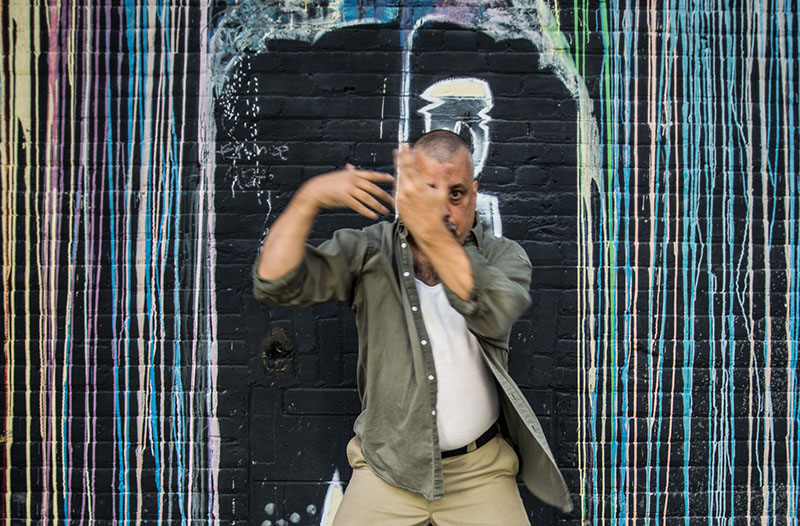
Photo by Robbie Sweeny
~~
What’s the biggest lesson you learned from nearly two decades of producing dance?
Self-knowledge. Understand yourself. I spent time trying to twist myself into what I thought people wanted or needed. I could have saved a lot of time if I had been honest with people about who the real me was and what I was really interested in. A lot of people had expectations that I let them have that were not realistic. If I had been more honest with myself and with other people, the road would have been less rocky.
Another lesson would be to align yourself with people who have similar values, and then listen to your intuition when you begin to sense your values aren’t aligned.
I think another lesson would be to understand the field and where you are as a choreographer in the continuum. The continuum is huge, so have a degree of self-knowledge of where you are in the continuum. Or don’t be a part of the continuum and explore something new, but at least know which it is.
From your perspective, what makes a dance successful?
Intent. I think we forget about intent a lot. We all have our own ideas; dance is subjective. We impose our subjective opinions on what we think dance is supposed to look like. It’s important to appreciate what the artist’s intention was.
But also, we should encourage artists to articulate what their intention is, to be specific so that when people are looking at your work, you can manage expectations. As a viewer, you can appreciate dance if you understand the intention, even if you don’t like that kind of work. That would be one definition of success.
Have your ideas about what makes a dance successful changed over time?
Twenty years ago, I was wrapped up in reviews and hierarchy and trying to get ahead. I think I used that lens to look at a lot of dance back in the day. Now that I’m older, I can see that sometimes that lens is useful to some people, but it was never particularly useful for me. Now, I’m a little more focused on whether the dance was successful for me. Was it what I wanted it to be?
Or bigger picture, did everyone have a good experience making the piece? What is the experience the collaborators are having, as well as myself? Instead of thinking my choreography needs to be on this stage or seen by this person or fulfill this funding request, I’m more focused on dance feeling successful because I got into the studio with the dancers.
Now there is no hierarchy. There’s no ladder. There are no reviewers. There are no funders. So I guess the whole point was to be in the studio together.
Can you say more about that?
The dance media landscape has changed dramatically. I noticed today there hadn’t been a dance review in the San Francisco Chronicle for the past three or four months, except for Nutcracker. There are only a handful of cities that still have dance reviewers.
Then funding has shifted dramatically. Funding is really anchored in community outreach now. There’s really no funding to make a piece just for the sake of making a piece. That kind of funding doesn’t exist unless you’re doing significant community outreach.
Then there’s no touring. There wasn’t really any touring funds for my generation. That was the generation before mine.
Therefore, no ladder.
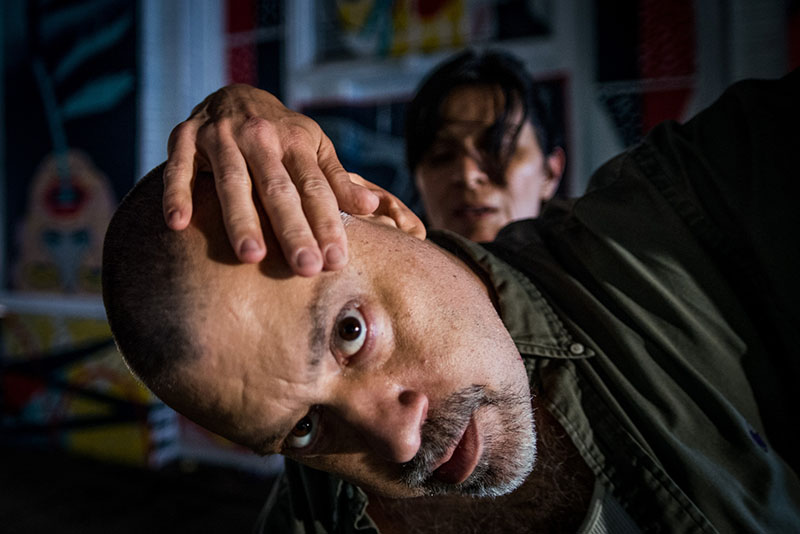
Photo by Robbie Sweeny
I agree, but I think some people still feel there is a ladder in dance.
Academia is still trying to sell students on this idea of getting a degree in dance and that there’s a career in dance, at least for choreographers. I think they are invested in the idea that there is still a ladder. There are still remnants of the old infrastructure and people holding onto it.
So are you feeling optimistic or pessimistic about the future of dance, especially in the Bay Area?
I’m a little ambivalent. I think cultures change and evolve. San Francisco as an arts leader has turned a corner and is not interested in supporting artists in the same way it did historically. People who want to make dances have to find new reasons to make dances. The reason can’t be a grant. A new reason might be to get TikTok followers. TikTok has transformed choreography, or at least what we have been told choreography was supposed to be. Concert dance is so expensive to produce right now. It’s also still rooted in people with access to intergenerational wealth or white privilege. Dance is evolving more into a community experience. I’m trying to be okay with that.
I agree that concert dance is rooted in a lot of problematic systems, but dance for TikTok is also rooted in a lot of problematic systems. Is there still a space for long-form dance that can’t wow you in 30 seconds?
I think there’s less and less interest in it. Thinking about the big picture, the amount of money it takes to train a concert dancer is insane. When you think about what you and I spent on our training and our dance degrees, we might be among the last generation that does that because there are fewer opportunities now. Then you have to produce the work. If you self-produce, it’s a lot more money. I don’t know if that big amount of money will be accessible to the next generation, especially since TikTok is so affordable. People will start gravitating toward what they can afford.
Young dancers aren’t moving to San Francisco the way they used to. With the cost of living, what dancer can afford to move here? It really hurt SAFEhouse when the San Francisco Conservatory of Dance closed and then Mills College merged with Northeastern University and discontinued their dance degree. LINES is no longer producing classes, only renting space, and they are phasing out the year-round training program. That’s a big constriction. Dancers aren’t coming to train at LINES, or get a dance degree at Mills, or go to the Conservatory. Why would someone come to San Francisco to dance?
There still are a handful of people making work though. When you were here back in 2010, we were averaging about nine shows a month, sometimes up to 16 shows a month, and we went down to producing two a month last year. Our last funder came to us and said, “We love what you do, but your venue is sitting empty 80 percent of the time. It’s hard for us to justify the funding when your building is empty.” I thought that was a valid argument. It was hard to hear, but I could see their point.
It came down to there not being enough artists to fill the space. The city is really anchored in economic generators right now. They are still bouncing back from COVID. The mayor has basically said every arts group needs to be part of getting us out of debt. One of the criteria SAFEhouse was being evaluated on was how much we are contributing to the economy. With just two shows a month, it wasn’t enough.
What do you perceive is your legacy?
I think I contributed in a significant way in a specific window of time when the arts were blowing up. I lasted for almost 20 years. I was really blessed to do that. For me, it’s a case of appreciating that and knowing that was enough.
I think about how white supremacy has shaped what dance we get to see. A lot of BIPOC artists are not even seen because they don’t have access to generational wealth or resources. We’re seeing a lot of work through a white lens still. Maybe dance really should be rooted in community. Concert dance came from classical ballet. It’s always been a white construct. This idea of concert dance is something we constructed. I’m watching these young queer BIPOC dancers do their shows. The work is super raw and speaks exclusively to their community. They don’t care if there is a white reviewer in the house. They don’t care if they are being judged through the concert dance lens. Maybe the dance community will become this niche market.
What advice would you give to a younger generation of dance artists?
Be clear about identifying who your community is. Community is going to be a big component of dance careers going forward.
On a secondary level, continue to be aware of marketing and development. Be aware they are just tools but know how to use them.
What is next for you?
I’ve been working with a group in Missoula, Montana, at a studio called Arts & Above. I’ve started splitting my time between San Francisco and Missoula. I’m also working with the iMPACt Center in San Francisco.
I’ll probably produce independently. I still have relationships with funders, so I’ll continue to write grants and produce. I just won’t manage the overhead of a building.
Is it a relief to have this chapter of your life behind you?
The last few years were hard years. And while I was still enjoying it, when the funder came to us and said they weren’t sure about supporting us anymore, I was kind of relieved. We were on the cusp of our rent doubling. It was also getting harder and harder to find time to choreograph. I didn’t go into this to be a venue operator. I went into this to choreograph.
It is a relief. But I would have kept doing it.
Is space – the way you offered it, space for rehearsals and performances – still such a gift?
Is space needed if concert dance is dying? Space has to serve the community. It goes back to the idea of gatekeeping. Back in the day, we would go into the space and shut the door. We didn’t interface with the neighborhood much. If there is going to be space going forward, we have to open the door and let the outside world come in and participate.
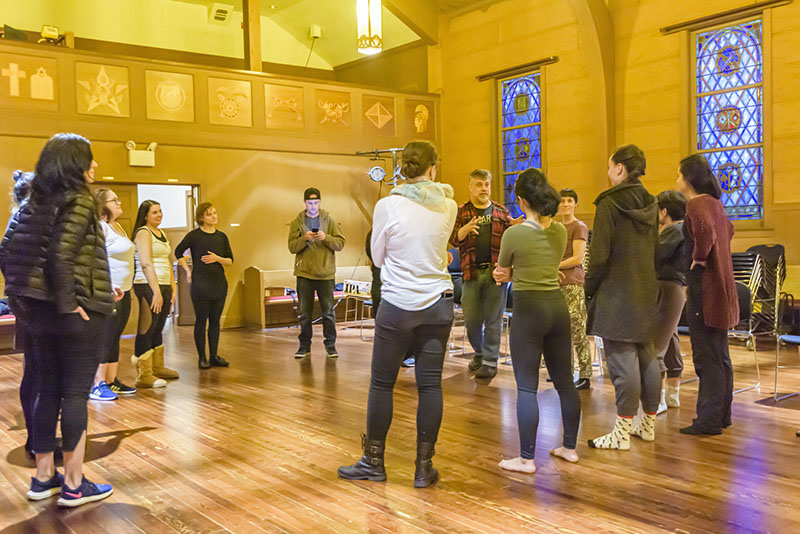
Photo courtesy Joe Landini
~~