The Abuelita Movement
May 18, 2026
An Interview with Las Abuelitas de Oro
BY EMMALY WIEDERHOLT
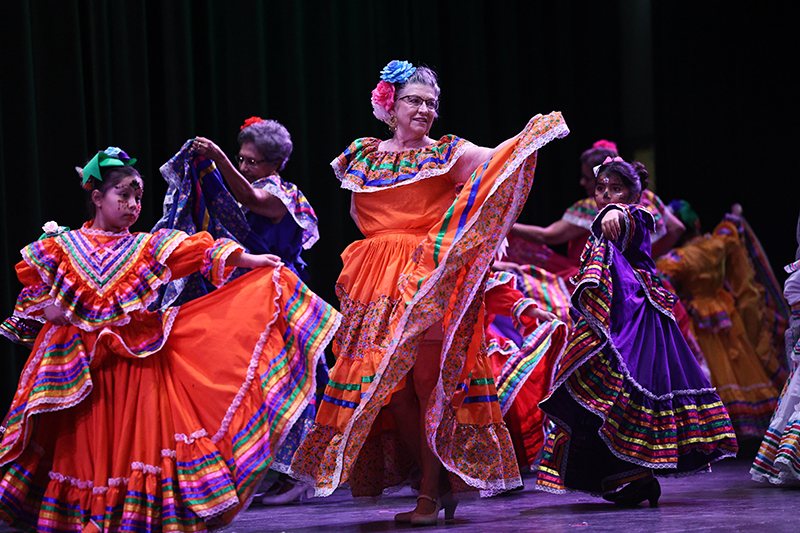
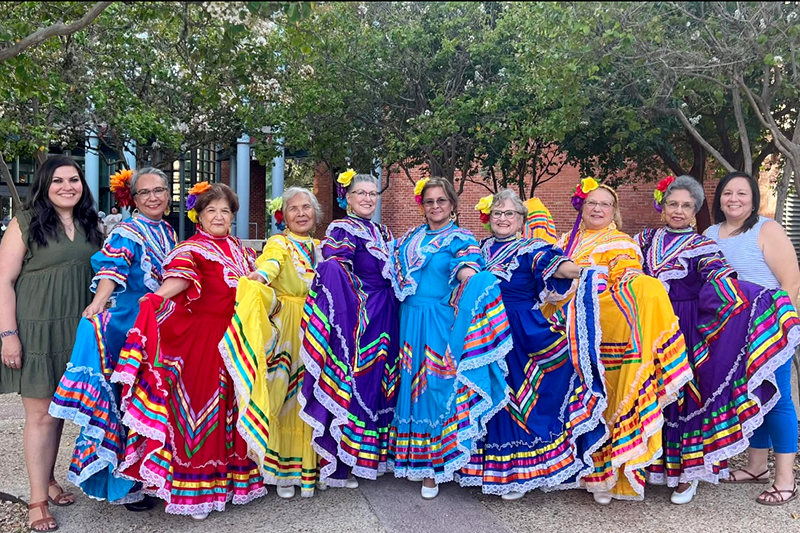
Las Abuelitas de Oro is a group of Latina women in their 60s, 70s, and 80s in San Antonio, Texas, who perform ballet folklórico at schools, festivals, and other local events. Their name derives from the TV sitcom The Golden Girls. Mary Ann Aguirre (age 82) and Martha Martínez (age 66) are two of the 10 members. Alongside sponsors Dr. Katherine Espinoza and Melissa Garza, they speak about their experience in the troupe and how it has positively impacted them and their community.
Note: This article was published in Stance on Dance’s Spring/Summer 2026 print issue. To learn more, visit stanceondance.com/print-publication.
All photo courtesy Las Abuelitas de Oro.
~~
When did you learn to dance and when did you join Las Abuelitas de Oro?
Mary Ann: I was born and raised on the east side of San Antonio, and back then, we had what we called Parks and Recreation, which would come into our neighborhood. I was eight years old when I started taking lessons. I took tap, a little ballet, salsa, flamenco, and folklórico. I went up to the age of 14. Then I met my future husband in high school and stopped. I retired at 67 and found that I wanted to go back to dancing, so I went to a senior center and found they were offering dance. I took them up on it and started dancing mostly folklórico, which I loved. I took private lessons as well as lessons with a group of senior ladies. I danced with them until Dr. Katherine and Melissa helped us found Las Abuelitas. We formed in 2024, so I’ve been part of it since the beginning.
Martha: I grew up on the border in Laredo. In our neighborhood church, there was a high school girl who was a dancer and wanted to be a dance teacher. In the summer, she would get all the girls together and teach us all kinds of dancing. I remember dancing to Tequila by Pee Wee Herman. We didn’t have any costumes. It was a low-income neighborhood, so we used whatever skirts we had. I did that through elementary school. In middle school, I joined the band and that was my life all through high school. After high school, I became a nurse. I come from Mexican parents, and we would go to Mexico to see my grandparents. We always went to see dances in the plazas and theaters on the Mexican side. I loved it. My mother’s favorite was the Norteñas dance with the cowboy boots, but I never really liked that one. I liked the big skirts. I retired when I was 63. I was volunteering at the Salvation Army when I saw Las Abuelitas dancing. I had tried a folklórico class before, but it was mixed ages and I don’t do well with the younger ones in the class. It was too hard. When I saw Las Abuelitas, I knew I wanted to do that. I messaged them on Facebook until we were able to come together. I have been dancing with them since June of last year.
How did Las Abuelitas de Oro get started?
Dr. Katherine: I saw the group that Mary Ann was part of when I brought them into a school to do a one-off performance. When I saw them dance and the children’s reactions, I thought, “These ladies need to be in every school.” As an education scholar, I took it as an opportunity to connect with them. I’ve been collaborating with them ever since. Las Abuelitas was formed by them; a few of them wanted to branch off and focus on performing in schools and interacting with children. Las Abuelitas formed when they started a partnership with a Title I elementary school where they teach dance to the children.
Melissa: We created the Facebook and Instagram after a few events within the school district and in downtown San Antonio. As soon as we did that, people started messaging us. From September 2024 to now, Las Abuelitas has been performing nonstop, with October, December, and April being the busiest months.
Dr. Katherine: Every Wednesday they hold practice at Virginia Gill Senior Center for about an hour and a half, and then they go to breakfast. It’s open to the public. Sometimes new people come and see what they are about. Some are there for the exercise. Right now, there are 10 active members and three who exercise with them. They are 65 to 87 years young.
Who leads the practice sessions?
Mary Ann: We lead within our group. We watch a lot of videos before deciding what dance we’re going to work on. We critique each other. There’s a lot of discussion. We help each other and are sensitive to each other. Some of us like to twirl and turn, and some of us can’t. We adjust the dances so they can be done by everyone. We have a young lady who videos us on her phone while we’re practicing. Then we look at it and say, “Oh no, erase, let’s do it again.” Sometimes we’ll hold two practices in a week because we’re determined to get a dance down by a certain date.
Is the main dance form ballet folklórico?
Dr. Katherine: The main dance form for Las Abuelitas is ballet folklórico, but within that they’ve done Jalisco style and Sinaloa style.
Where do Las Abuelitas get their costumes?
Mary Ann: We’ve handmade one or two costumes, but we have bought the majority. The last one we got was very generously bought by Trinity University.
Martha: Some of the ladies who were formerly dancing sell their costumes to us. I was able to buy my costume from someone who is not able to dance anymore. I have family on the other side of the border in Laredo, so I also go across the border to buy blouses because they are much cheaper.
What kinds of venues and events do Las Abuelitas de Oro perform at?
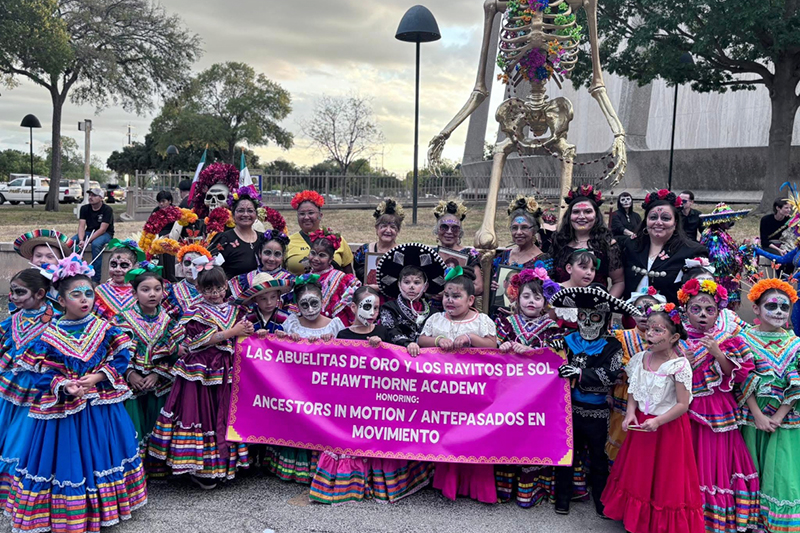
Dr. Katherine: They perform at city-wide events like the Dia de los Muertos Festival as part of the procession, the Tobin Center for the Performing Arts, elementary schools across San Antonio and surrounding areas, several local churches, other senior centers, and even at the University of Texas San Antonio women’s basketball game during halftime.
Martha: When there is a cultural event, they often bring us in.
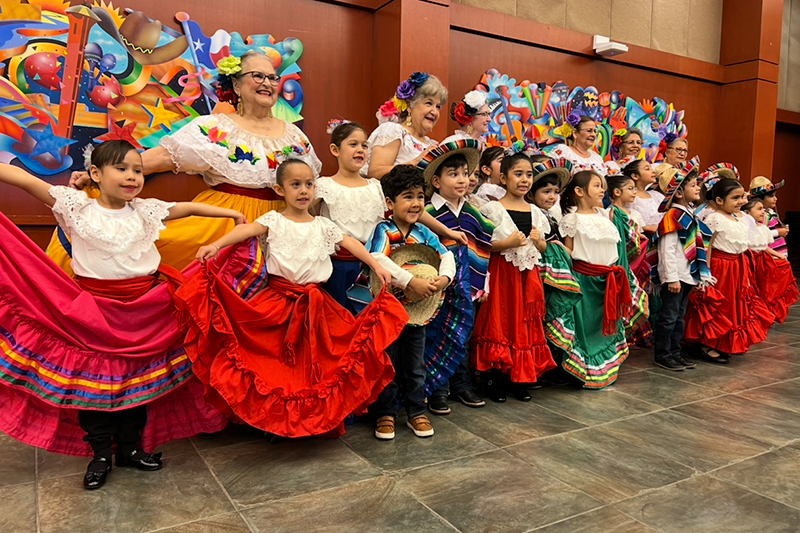
Mary Ann: We’ve been able to incorporate the children, who we call Los Rayitos, or the sunshine children, to carry on our traditions. We’ve been able to invite them to perform with us. We’ve taught them the dances. It makes us very proud to know the next generation is coming up.
Martha: At Christmas, we have an event at Trinity University where we teach the kids how to make tamales. Some of the kids do it at home, so they were teaching me. It’s valuable to our culture.
Dr. Katherine: What Martha is describing is an extension of Las Abuelitas de Oro that’s not tied directly to dance but to the cultural preservation and the intergenerational exchange of knowledge that is central to the vision of Las Abuelitas.
Do you have a particular performance or experience with Las Abuelitas de Oro you’d like to share more about?
Mary Ann: We performed with Ballet Nepantla out of New York, a beautiful dance group. At my age, I never thought I’d be performing onstage with professional ballet dancers. We did Dia de los Muertos, a beautiful play they brought. They asked us to be part of it and taught us parts to dance with them. We even got to wear their costumes. To be onstage with them made me feel like I had died and was reborn again. My whole family was there, which made it even more special. My children, grandchildren, and four of my great-grandchildren all got to see me dance. My son took a video of it. He said, “We’ll always remember you dancing.”
Four of the ladies I’ve known for more than 16 years. These ladies have been such a part of me. The new ones come into our group, and they make it seem like they have always been there. It’s fun to be with people my own age.
Martha: My background is public health, so my favorite memory was when we were invited to Frida Fest in the center of San Antonio. We got to dance with the children. We danced first, they danced, and then we danced together. The kids say, “Hi Abuelita.” To have people from different parts of Texas come and see this partnership was very important, especially to have parents bring their children on a Sunday. They don’t have to do this, but the kids like to come and dance and the parents value it.
My family was there to see me dance live for the first time. They had seen me in videos, but never live. I have two grandchildren who are teenagers. I thought they were going to be embarrassed to see their grandmother dancing, but they weren’t.
Has dancing as an older woman given you a certain confidence or perspective that you maybe didn’t have when you were younger?
Mary Ann: When I was young, I didn’t have confidence at all. Now, I love who I am and how I look. When I dance, I can express myself. The music is what I’ve heard all my life in my home. I’m having fun dancing and it’s making my life a lot happier at my age.
Martha: I remember vividly as a child not having any costumes. Now I feel like a professional dancer when we wear our dresses. Then there’s the health aspect; it is a workout. It helps us stay in shape. People who are my age ask, “Aren’t you tired?” I say, “Yes, we are tired after dancing!” But the community we have formed as older women dancing is the most important aspect of the whole thing for me.
Any other thoughts?
Mary Ann: As we seniors have gotten older, some of us tend to mellow out. It gives us patience with other people. I was always on the go all the time when I was younger. Now I find I can sit back and see things in a different way. I’m not so judgmental of people. I value life and I value every day. That’s something the younger generations should not wait to experience. Some of us are blessed to be this old. Some of us will not make it to this age. I wish people would slow down a little and enjoy what they have.
Martha: Having an academic setting like Trinity University value and support us is important for the future of this multicultural and multigenerational concept. I value Dr. Katherine and Melissa who have taken us under their wings.
Mary Ann: We’re very grateful to Dr. Katherine and Melissa for sponsoring us, as well as to Trinity University for being generous to us. Without them, we wouldn’t be where we are right now.
Dr. Katherine: What we’re doing and trying to build is the Abuelita movement. When we started, I don’t think we realized how much our community needs Las Abuelitas. It has elevated the group as a whole and now given them national recognition. For Melissa and me, it’s become almost a full-time job. We’re moving toward nonprofit status because of how much the Abuelitas are needed. We get requests almost on a weekly basis. It’s the Abuelita Movement.
~~
Follow Las Abuelitas de Oro on Facebook and Instagram @lasabuelitasdeoro.