Creating a Home for Afro-Indigenous Dance
March 30, 2026
An Interview with Umi IMAN
BY EMMALY WIEDERHOLT
Umi IMAN is a dance artist, educator, and curator based in Atlanta, GA, and Brooklyn, NY. She is the co-artistic director and founding member of Al Taw’am alongside her twin sister, Khadijah Siferllah. Al Taw’am fosters storytelling and multidisciplinary dialogue in Black and Indigenous communities worldwide. Umi is also co-founder and executive director of Sequoia Ascension, a community organization focused on the well-being of Atlanta’s Black and Native communities through dance, wellness, and housing initiatives. Here, she shares how home became a central part of her practice, how Al Taw’am became a vehicle to tell her story, and how Sequoia Ascension creates space for other Afro-Indigenous dance artists to learn about their culture.
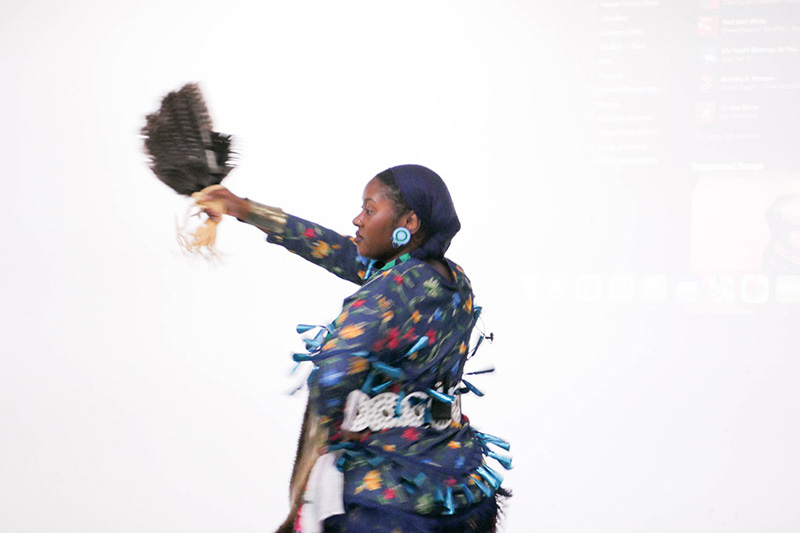
Photo by Mia Usman
~~
Can you share a little about your dance and movement history and what shaped you as an artist?
I was born and raised in Minneapolis, Minnesota. My mother was a dancer. She is of a Black American and Jamaican background, so growing up in our home, we had so much art and culture from her people and also from people throughout the world. A lot of our Sundays consisted of cleaning the house, listening to music, watching music videos, and dancing to music from around the world. My love of music and dance was definitely sparked by my parents. My father, who is not a dancer but has been an athlete for his entire life, comes from a Black American and Tsalagi background. He shared many aspects of his upbringing and also instilled in us the importance of nurturing the athletic body, so I grew up in a house full of art, music, culture, and athleticism.
My mom had a community class at a local YWCA. For many years, she taught different fitness classes. When she started teaching dance, my twin sister and I came to the classes and eventually started assisting when we were around eight years old. My love of dance and my love of sharing with folks and community started very young.
Eventually my mom realized that my twin sister and my skills had advanced, and she wanted us to continue nurturing our love of dance. Post 9/11, she started looking at different dance studios. We realized we weren’t welcome because we were Muslim and dark-skinned. A lot of Black and brown folks were dancing at home not only because of cost but because of not feeling welcome. Add to that being Muslim and wearing hijab, a lot of the dance studios didn’t want to accept us. At first it was very discouraging, but after so much rejection, my mom said, “Hey, we have a world of Black and Indigenous dance we are tapping into at home,” and that set my sister and me on a path of archiving Black and Indigenous dance.
We used to spend hours writing our own database of different dances, where they are from, what they mean, and practicing as much as we could. Being teenagers, and with the advent of YouTube, we took to the internet to learn as much as we could. Eventually, we looked for people in our Minneapolis community doing those dances. We would say, “This month, we’re going to hone in on house dance, or locking.” Then we would go find someone in Minneapolis doing house or locking. Little by little, we built our community by way of creating a database and finding tangible people to help us go deeper into that specific dance.
Today, I identify as an archivist of Black American dance. I also dance jingle on the Southern and Eastern powwow circuit, as well as practice Cherokee dance lineage. There are so many dances that I carry. A lot of Black folks talk about making a way out of no way. Even in the midst of so much rejection, racism, and Islamophobia, it set me on a different path, a really beautiful path. It set me on a trajectory to embody dances of people who look like me, and I’m grateful for that.
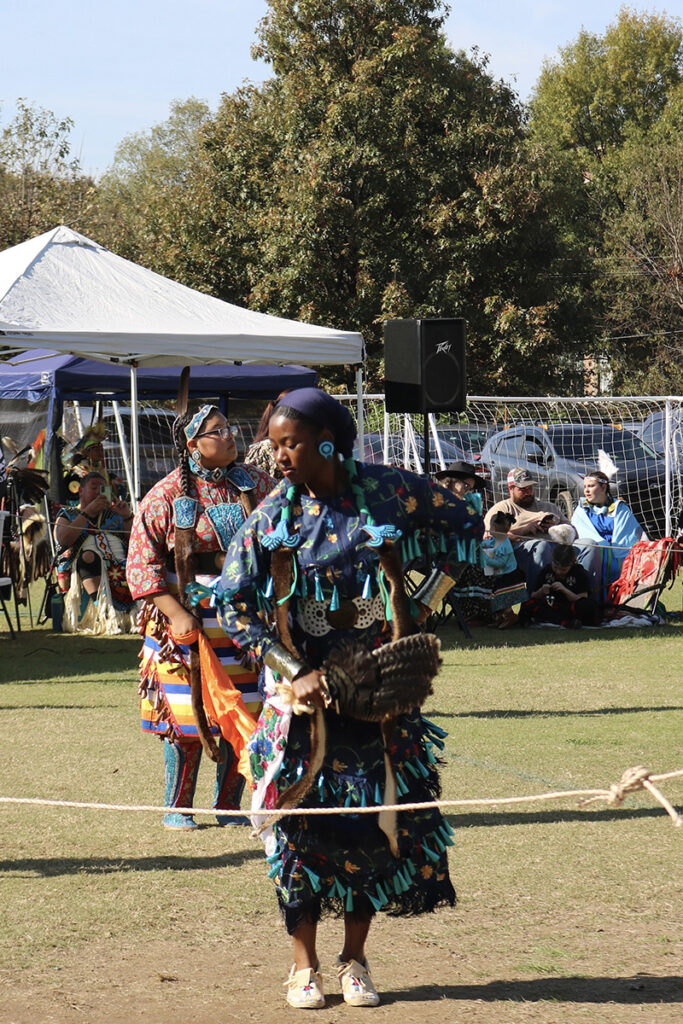
Photo by Paige Mitchell
I understand you are co-artistic director and founding member, along with your twin sister Khadijah Siferllah, of Al Taw’am. Can you share with me a little about the impetus for founding Al Taw’am?
Around 2010, my sister and I were part of a collective called We’re Muslim Don’t Panic. We were in our early teens, around 12. It became a viral sensation featuring us along with another Muslim woman who had a dance collective. It was created at the time when France had just put a ban on hijabs. This collective assembled, and we began to create dance in traditional Islamic attire, like the niqab and abaya. It created this imagery people hadn’t seen before: Muslim women dancing hip hop in Islamic clothing.
Going viral was never our goal, but at that time a lot of people had never seen Muslim women dancing in public. In Muslim communities around the world, there’s a shyness that many women feel. We’ve been a part of advocacy for women to feel more empowered in dance and sports and to wear hijab while doing it. But at the time in the early 2010s that wasn’t a thing. We were dancing at a festival, and someone captured a video and put it on YouTube. It got millions of views and got immediate backlash. There was a lot of Islamophobia from people who weren’t Muslim. There was a lot of misunderstanding from people who were Muslim. At the time, as young teenagers, we took some time away from dance and felt like maybe it wasn’t our calling. After some time of experiencing life without dance, it was depressing. It was a life I wasn’t interested in living. Al Taw’am was created out of that time of needing to empower ourselves and to continue dancing. We stepped into our identity as Muslim women, and that dance has to be a part of that identity.
We started with performing and teaching, but eventually we began collaborating with different organizations and creating residencies where we would travel all around the world and teach dance from our perspective. We even have a distinct style of movement that is from all the dances we spent so much time archiving in our childhood. For example, we dance barefoot, and it’s reminiscent of dancing in a home with no shoes in the house. There are so many aspects of Al Taw’am that embody our story. Khadijah and I are nurturing different projects, but our home base together has been Al Taw’am.
I moved to Atlanta in 2019, and my sister moved to Brooklyn at the same time. Before then, when we were living in Minneapolis, we were putting on our own productions in Minneapolis and wherever our residencies took us. We went to the South Dallas Cultural Center and worked with Black organizations there to put on a show. We went to Berlin to do the same thing. Most of our residencies consisted of gathering Black and Indigenous folks to learn and experiment, and eventually it would lead to a collective communal experience. Within our own artistic practice, we created movement pieces that represented different aspects of our identity. As Black Indigenous Caribbean Muslim women, we’ve used dance as a vehicle to tell our story and what our people are going through.
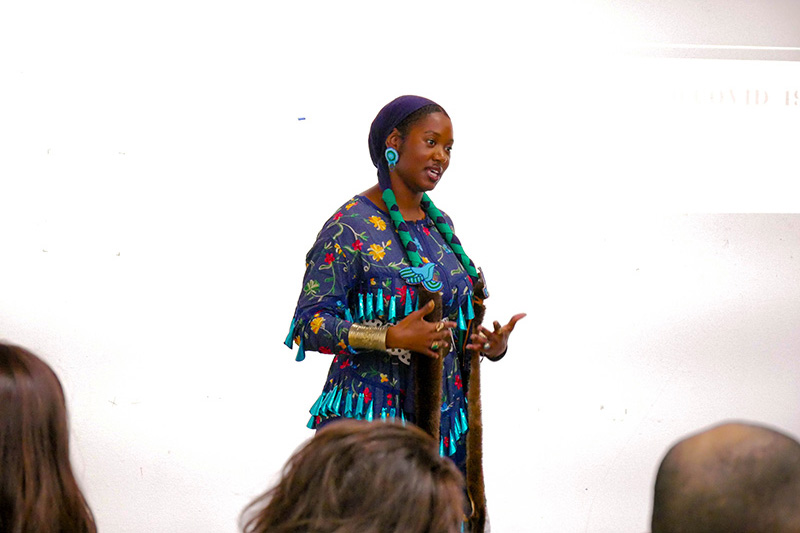
Photo by Mia Usman
Are there one or two projects with Al Taw’am that you’d like to share more about?
A recent project that I hold near and dear was for Body Prayers with the Walker Arts Center. It was during COVID, in 2021, so we were tasked with creating video work instead of presenting onstage. We created a three-part piece called Zero. In the last part, we brought together all the prayer rugs that our family had prayed on and created a rug mosaic and danced on the prayer rugs. It was very beautiful with the colorful rugs and expressive dancing. To my point of us telling our story, those were all the rugs we had ever prayed on.
We have another multimedia piece called Still Fighting, where we express our frustration with police brutality and seeing so much Black life taken away. That piece was very emotional with images from throughout the many years of still fighting for Black folks as we’re dancing, telling our story, and expressing our frustration.
We’re at a point in our career where we’re creating space for others, whereas we used to be the ones onstage. Powwows & Cyphers was a show that brought together Black vernacular dance and music with Native American dance and music around the theme of a circle. A cypher is meaningful to Black folks; it’s a nonjudgmental space where we share our love of culture and dance. That is similar to powwows for Native American folks. These are two worlds we’re a part of. It’s some of my proudest work creating a space to reimagine these dances happening together. I wore a jingle dress and did a duet with a dancer waacking. We had grass dance, an Indigenous dance you’ll see done at a powwow with a drum beat, done to hip hop. We’re bringing these two worlds together, and the people doing the dances are based in both of those worlds. Afro-Indigenous people are craving that representation.
You are the co-founder and executive director of Sequoia Ascension, a community organization focused on the well-being of Atlanta’s Black and Native communities through dance. Can you share more about Sequoia Ascension?
Back in 2019, I had moved to Atlanta seeking to deepen my connection to Southern Indigeneity. I grew up with the understanding that I had a multilayered identity. Minneapolis is where I was born and raised, but it’s not my people’s homeland. Growing up around a lot of Ojibwe folks, I felt like I connected but didn’t necessarily belong. I saw my opportunity to deepen my understanding of my identity by moving down South. My father’s side of the family is Indigenous to northern Georgia. In 2019, I reconnected with Southern Indigeneity by being in community, going to powwows, learning more about the land, and going to ceremony. An important part of stepping into one’s identity is stepping into community, especially people who look like me who are considered dark-skinned Native American. That can be a scary experience; I’ve had my fair share of disheartening experiences when I’ve stepped onto the powwow circuit or shown up to ceremony. But that’s something I was already prepared for by not being welcome in dance studios back in Minneapolis. I’ve learned to be exactly who I am, and eventually the community I seek will develop around me. I started to meet more people who look like me; it felt like a coming home.
We were very fortunate to come into some land in 2020. It’s situated in Washington Park near the West End in Atlanta. That home is Sequoia Ascension. My sister and I turned a home into an arts space. On one side we host intimate gatherings, and on the other side we run an artist-in-residence program where artists can receive a year of subsidized housing at Sequoia Ascension. Using that home as an arts space is another full-circle moment of my upbringing where the home is the dance studio when you’re not welcome anywhere else. Dancing in my home growing up showed me just how much the home space is an integral part of my arts practice. When I started Sequoia Ascension, I had these big ideas about it being a large community center. I stopped and thought about my upbringing of talent shows and dance practice happening at home, and I realized I needed to start this organization in a single-family home. Sequoia Ascension has developed into a place for Black-Native and Afro-Indigenous people to have a space of belonging.
Sometimes we function out of that space, and sometimes we function in different places. Right now, we’re focusing on building Sequoia Ascension’s presence on the East Coast, connecting New York down to Georgia. A common Afro-Indigenous experience is being Southern and journeying up the East Coast. There’s a lot of Afro-Indigenous people down South who want to reclaim their Afro-Indigenous identity. However, they don’t have an entry point. We wanted to have a space where we could share dance with folks who have a harder time getting access to powwow culture and Indigenous dance.
I’m a jingle dress dancer, which is a dance that was created by Ojibwe tribes that reside in Minnesota. It’s now a pan-Native dance. Sequoia Ascension has created a space for me to do things like share jingle dance. Our organizational programming stands on the three pillars of dance, wellness, and housing. We started with teaching dance classes and then opened it up to other wellness practices like basket-making and medicine-making. Dance and these other cultural practices are a key part of what keeps us well. Despite Black and Native people having a hard time accessing health care, we have other Indigenous ways to access medicine and move sickness through the body.
There’s a lot to be said about why having dance spaces that preserve Black and Indigenous culture is necessary, especially in a place like Atlanta where there’s a lot of displacement and gentrification. That’s true in New York as well. We realized how important it is for artists to have a home where they feel safe. We mean home both in the literal sense of advocating for more housing opportunities for our people, and also finding an artistic home. How can larger organizations contribute to preserving our culture and creating space for us? We deserve that space. We can create our own space, but we also advocate for larger organizations to offer up space, even if it’s just for a few months’ residency.
What’s next? Do you have an upcoming project or focus you’d like to share more about?
Our last project through Sequoia Ascension was the Atlanta Afro-Indigenous People’s Festival. It was a two-day festival in Atlanta that featured film, workshops like basket- making, panel discussions, and we premiered Powwows & Cyphers. The second day was a traditional powwow, which we called the Afro-Indigenous powwow. Every event was sold out. It was a monumental experience. Up to that point, Atlanta hadn’t had an Afro-Indigenous powwow that was two-spirit-inclusive. We made sure two-spirit folks in our community had a place in leadership and a place in the powwow to express themselves, which is not typical in the South. It was an amazing festival that Khadijah and I were so proud of. We had folks fly in from as far as New Zealand to attend. We’re imagining it to be a moving festival happening up and down the East Coast. We’re working on the next festival being held in New York. We’re also having early conversations of it happening in other places in the Northeast and Southeast. Hopefully the next one will be later this year or next year. We’re trying to make it happen in the midst of all these funding shifts.
We’re also continuing to grow as artists. I was in a tragic car accident in 2024. I’m still recovering from 10 disc injuries, a few muscle injuries, and minor memory loss. I’m on this new path of dance and disability justice. They say we all will be disabled at some point in our life. To be on this new path is both scary and liberating. A lot of things are changing for me. It’s deepening how I’m taking care of myself and how I’m taking care of the people I work with.
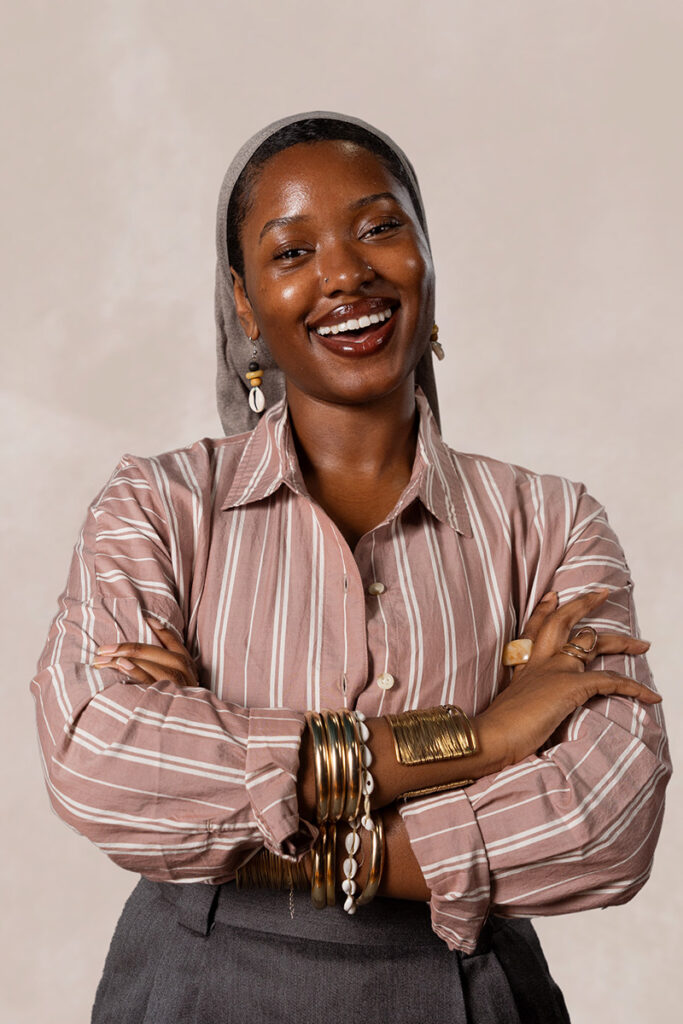
Photo by Awa Mally
~~
Follow Umi IMAN on Instagram @umi_iman_movement.
Responses
There are no comments at this time.
Be the first to start the discussion by filling out the comment form.