Being the Bridge
March 16, 2026
An Interview with Ani/Anito Gonzales Gavino
BY EMMALY WIEDERHOLT
Ani/Anito Gonzales Gavino is a Pilipinx multidisciplinary artist, movement scholar, and cultural worker originally from Panay Island, Iloilo City, Philippines, and now based out of Philadelphia and Miami. Ani/Anito works at the intersection of dance, film, theater, poetry, music, and community-engaged practices to mobilize discourse and collective healing. They use dance as a portal to address interweaving cultural and political histories, particularly concerning the effects of colonialism, immigration, and indoctrination. Here, they discuss Ani/MalayaWorks, an ongoing collaboration with their daughter, Malaya, as well as how their work serves to bridge the Pilipinx diasporic experience.
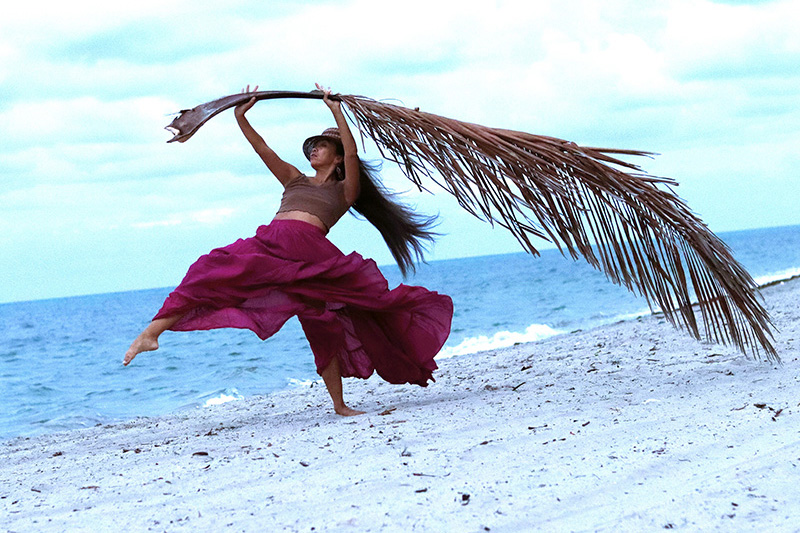
Photo by Pedro Gonzalez Insua
~~
Can you share a little about your dance and movement history and what shaped you as an artist?
I was born and raised in the Philippines. I come from an island in the central part of the Philippines called Panay. I started dancing in fiestas. There are many town celebrations with sound systems, usually honoring the saints. The Philippines is predominantly Catholic because of Spanish colonization. That’s how I discovered dancing freely to US pop and R&B music. Then, in school, we learned Philippine folk dances that were part of physical education.
Fast forward, people told my mom to put me in ballet. I did ballet training at a school in my small city with Nila Claravall Gonzalez, but when I went to Ballet Philippines, they were more into this thing called neo-ethnic. The vocabulary was ballet, but they were telling different Pilipinx stories instead of Romeo and Juliet or Swan Lake. Agnes Locsin was my favorite choreographer, and she shaped the way I saw dance.
When I came to the US, I saw Alvin Ailey and went to school there. I was interested in how ballet could highlight the context of a culture, even through the choices of music.
I danced with Cleo Parker Robinson Dance and Dallas Black Dance Theatre. I was able to work with Katherine Dunham. I danced for people who practiced dance as an archive or history and who believed dance is political. I’ve been following that mantra my whole life.
When I moved to Philadelphia, I danced for Kun-Yang Lin, a Taiwanese choreographer who uses elements of Chi and comes from an Eastern sensibility. I liked thinking about dance as a way to understand the culture we belong to. When I worked with Ananya Dance Theater, I learned Odissi and Chhau and other forms. That informed my own work and affirmed that I have my own language coming from the Philippines.
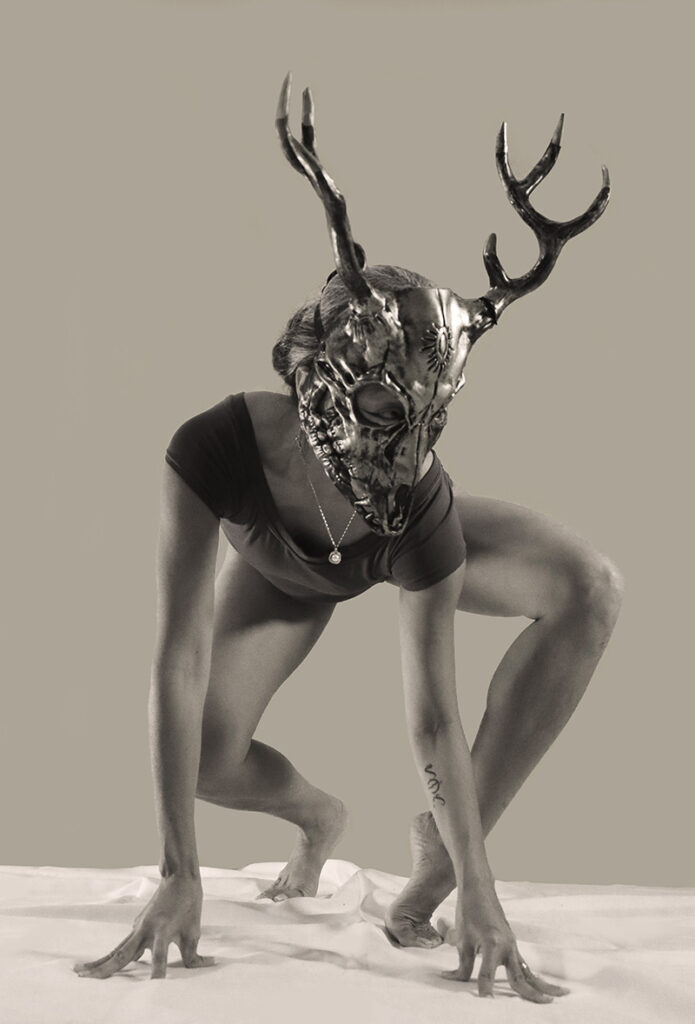
Photo by Pedro Gonzalez Insua
When did you start choreographing?
I started choreographing when I was in Richmond, Virginia, when I became a mom. After my career with Dallas Black Dance Theatre, I moved to Virginia and was going to be a mom. It was a difficult time. Most dancers have dance as part of their identity. Suddenly I didn’t have dance, so I had to find a way to dance in my mothering. When my daughter was crawling all over the floor, I tried to find how dance was manifesting in my living room. I used to film her and copy what she would do and make that into my own phrase work. Eventually the choreography began because I wanted to share stories with my Pilipinx community in Virginia. There is a big Pilipinx population there. I was worried that the stories wouldn’t pass on, and I was worried about that for my daughter. I started highlighting Pilipinx bedtime stories and myths like “Ibong Adarna” in my choreographic works.
Can you share more about Ani/MalayaWorks? What was its impetus? I understand it is a mother/daughter project?
It became a thing in 2014. My daughter was five or six, and I started creating an ensemble of dancers. It was heavily centered on immigration. I had that journey of getting my citizenship, being racially profiled, and even being handcuffed in Texas. This was post-9/11, and there was already a lot of fear of immigrants. I had to bring my passport everywhere. I was constantly scared. I created works around that.
I was starting to teach in Virginia and created an ensemble from the students. My daughter was also part of the process.
When I moved to Philadelphia, that process continued. It became my container, how I continued my mothering as well as my journey as an artist and a member of my community.
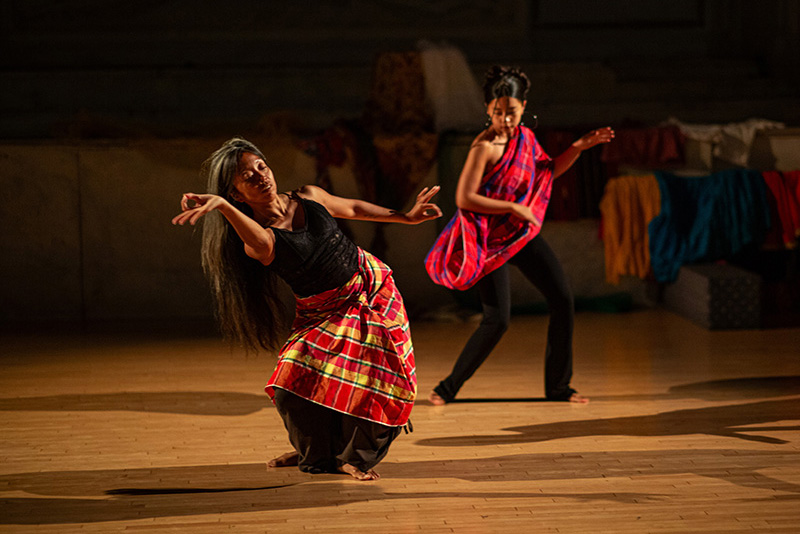
Photo by Rachel Keane
Are there one or two projects you’d like to share more about?
So many beautiful projects!
There is one called Tagong Yaman, which means “hidden treasures.” The point is that the treasure is within us, the community. It was a long process. First, we would come together and learn lullaby songs. It was me and my daughter, Malaya, who is a poet, and the dancers. Then there were community members who created sound scores. It was performed in a former shoe store and became an event hosted by the Painted Bride Organization. In the display window, we put Pilipinx star-shaped lanterns. Prior to the performance, there were workshops where people could come and learn to make the lanterns. We made an installation. We also created altars of heroes. I put QR codes on who the Philippine heroes are. If you grow up here in the US, you learn a different history. This was my way of sharing the history I learned growing up in the Philippines with my community.
Ani/MalayaWorks consists of dancers from the Global South. Can you say more about the importance of this, especially in a North American context?
At first, it was just Malaya and me. And then it was me, Malaya, and Pilipinx-American artists. I was learning more about rhetoric that promotes a divide-and-conquer mindset throughout history. I felt it was important to create a space just for solidarity. My goal is not exclusion, but the dance scene is Western-dominated and Euro-centric. If those people are going to be highlighted and featured by major presenting organizations, then I don’t need to do that. I’d rather do what is missing, erased, or invisible. Being Pilipinx is not quite Pacific Islander or Asian. I find that not as a deficit but the magic in our identity: to be the bridge. I wanted to bring together people from the Global South and discuss oppression from colonialism and how it manifests in our cultures, so we can feel more empowered.
Your scholarship focuses on the reclamation of the Africanist as the origins in dance forms, and that you’re interested in tracing connections between the Philippine islands to the Caribbean. Can you share more about this scholarship?
In grad school, I started focusing on the Indigenous people in the Philippines, called the Aeta or Ati. They are Black. People say they are original people, but where did they come from? I was interested in cultural interactions before colonialism. While doing research for grad school, I noticed an African diasporic presence in the Philippines that isn’t always acknowledged. That was the starting point. In the Philippines, there are dances and rhythms that are polyrhythmic. My romantic partner is Cuban and a musician, and he would note similar rhythms. My dance career was with Cleo Parker Robinson and Katherine Dunham, who encompassed the vastness of the African diaspora in the Western hemisphere. I saw all these connections. I’m trying to put it all together.
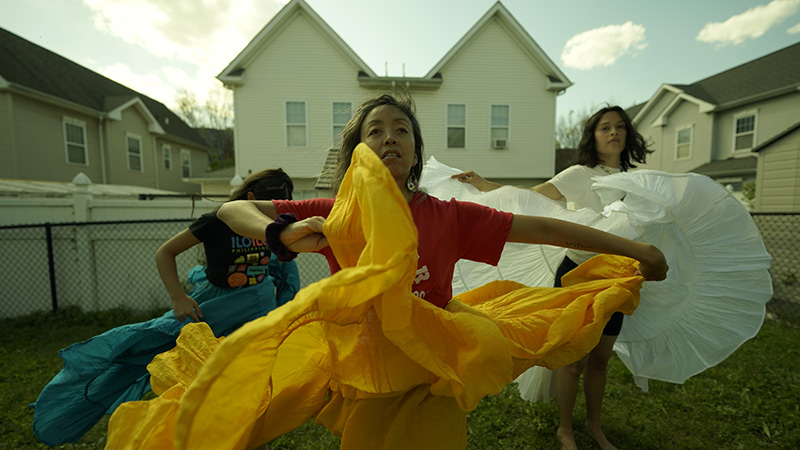
Photo by Torian Ugworji
You also host a radio show, and organize poetry open mics, potlucks, and pop-up teach-ins. What are some of the ways all these activities come together?
For example, we went to the Philippines recently to visit my family. We were in a small city where art isn’t at the forefront. I saw a small gallery I thought was beautiful and asked the owner if we could do something there. I proposed an open mic for poets because my daughter is one. I like collaborating with her and her modality. The gallery invited other local poets to attend, and I interpreted the poems through movement. I told my family that I was going to do an open mic at the gallery. They expect a ticketed show like at the high school. I told them it was for everybody. My mom was like, “Who would come?” but it was packed.
The radio show came out because I’m a firm believer in practice and progress. My daughter likes writing and preparing what she has to say. She’s the Northeast Regional Youth Poet Laureate and is currently vying for the US title. The radio show is a practice for us to talk about our thoughts, a practice of speaking. It’s also to show a conversational relationship between mother and daughter that discusses history and politics. What we discuss on the radio show becomes what we bring to the studio. We’ll create a scene or a phrase based on what we discuss.
What’s next for you? Do you have a project or focus you’d like to share more about?
We’re doing this project called Agos Y Viento that bridges Pilipinx and Latino/Caribbean stories that are impacted by immigration. We’re talking to people who are seeking asylum or who are living in fear, interspersed with our personal stories of my migration and my daughter’s first-generation experience of living in a liminal space, not fully belonging. It’s a dance theater project and the cast is my family – me, my daughter, and my partner – plus some guests. The guests will change depending on where we tour.
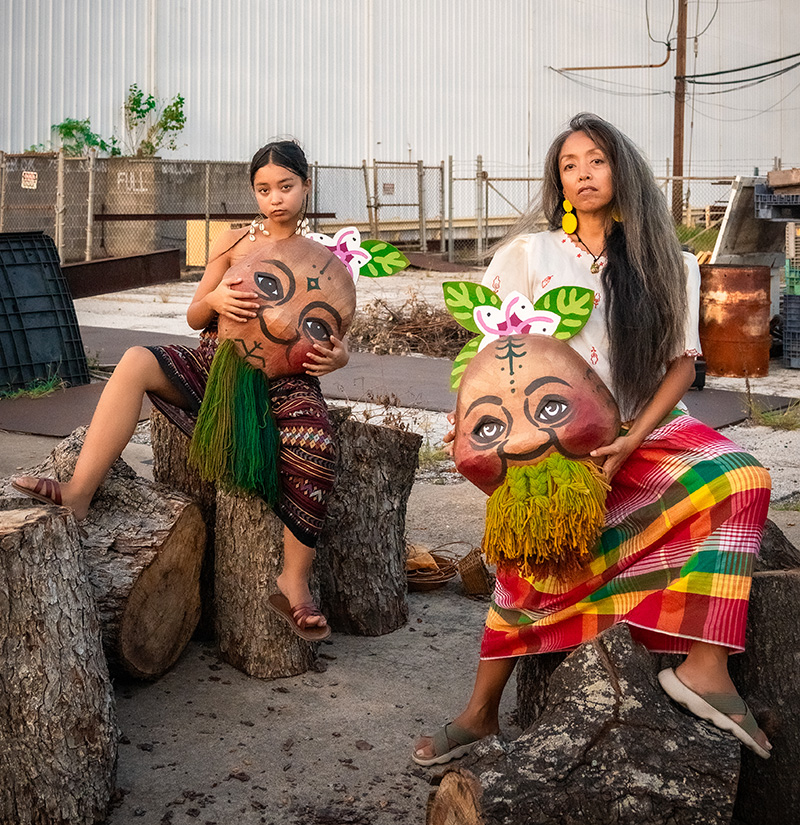
Photo by Cristian Toledo
Any other thoughts?
I’m excited right now to teach Pilipinx folk dance in academia at the University of Miami. This is the first time it’s happened in my entire career. I’m teaching three courses. I still teach modern and jazz, but I also teach cultural forms, including Pilipinx folk dances. I’m so happy every time I teach it, seeing people from different backgrounds interested in learning my dances, but also the colonial entanglements that come along with these stories. I like to connect my cultural folk dances with different dance forms. We’re so much more connected than different.
~~
To learn more, visit www.anigavino.com.
Responses
There are no comments at this time.
Be the first to start the discussion by filling out the comment form.