The International Museum of Dance: A Living, Future-Facing Framework
February 16, 2026
An Interview with Hilary Palanza Gutkin, Founder of the International Museum of Dance
Hilary Palanza Gutkin is the founder of the International Museum of Dance (IMOD), an initiative that fosters shared human experience through the understanding, exploration, and participation in the art and language of dance. IMOD is redefining the scope of a traditional museum through online and in-person experiences that celebrate, integrate and teach dance across communities, cultures, and generations worldwide. Hilary is an arts leader, dancer, and educator currently based in Santa Fe, New Mexico. Here, she shares the impetus behind IMOD, the scope of its programming, and its goals for the future.
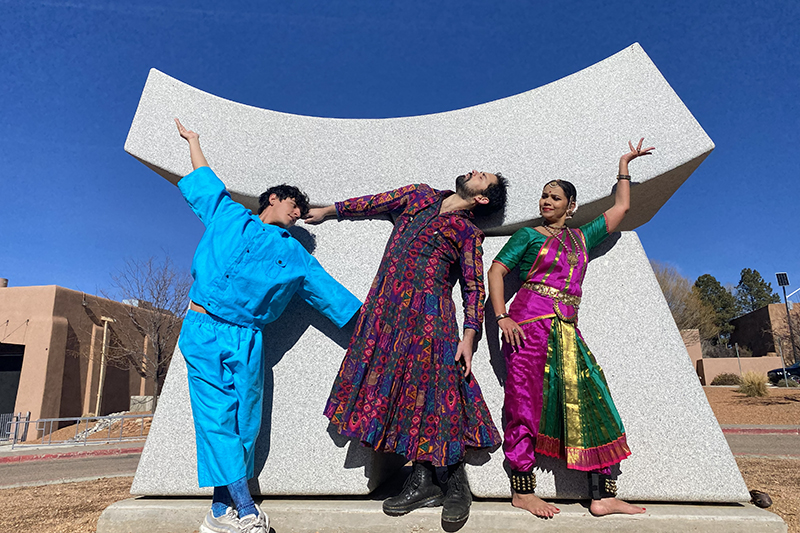
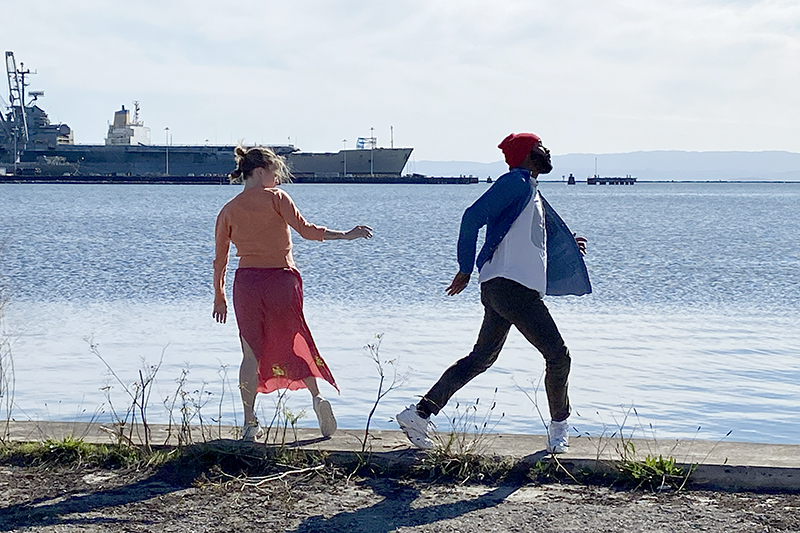
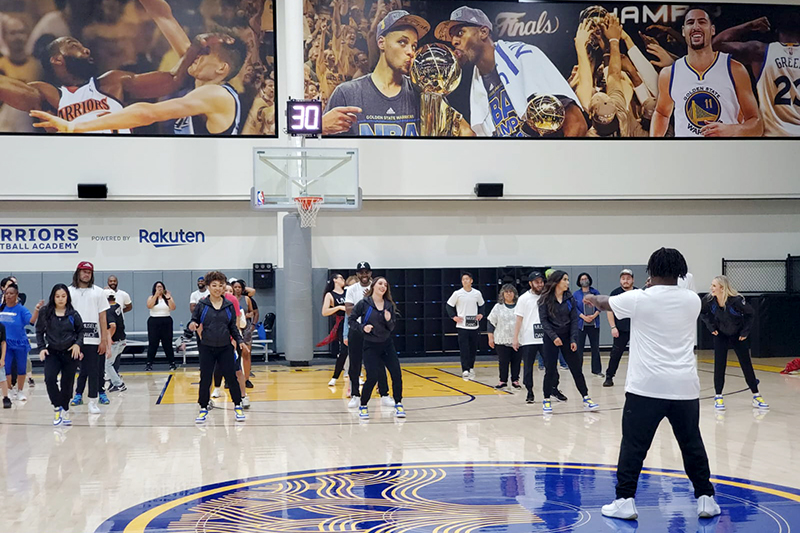
Photos courtesy the International Museum of Dance
~~
Can you tell me a little about yourself and your dance history?
I come from dance, but my work has always been about what dance makes possible. I’ve spent years working across education, leadership, research, and community engagement, and what I kept seeing was the same gap. Dance is everywhere in human life, yet the systems around it do not reflect its power, reach, or relevance.
What aspects of your own dance history shaped you?
Honestly, it was a combination of many things. I always felt a need to dance from a very early age. It feels like prayer to me, a way of deeply listening.
Equally formative were my teachers. I absorbed something from every environment I was in. I began in jazz and ballet in Santa Fe, shaped by extraordinary educators including Audrey Derrell, Susan West, and Gisela Genshow. I studied at the University of Arizona and at Colorado College, where I was deeply influenced by teachers who valued curiosity, rigor, and humanity in equal measure, among them Bill Starr, whose encouragement helped shape my artistic voice, as well as Peggy Berg, Donna Mejia, Tom Lindblade, Patrizia Herminjard, and Debbie Mercer.
San Francisco was another turning point. I was surrounded by artists who understood dance as culture, activism, and lived experience. Rosangela Silvestre, Janice Garrett, Liz Roman, Tania Santiago, Kathleen Hermsdorf, Dudley Flores and the Rhythm & Motion community, Alonzo King, and the artists connected to site-specific and civic dance practices all expanded my understanding of what dance could be in the world. Now I am back in Santa Fe, and I have to mention Annie King, Fernando Ramos, and Elise Gent. Amazing, generous educators.
And of course, the performances themselves! Watching, witnessing, being moved by countless works over the years. All of it shaped me. Dance has taught me how to pay attention, how to feel deeply, and how to stay in conversation with the world.
What was the impetus or inspiration behind the International Museum of Dance?
IMOD was founded on a simple truth. Dance shapes culture, identity, and connection, yet it lacks contemporary spaces that help people engage with it meaningfully. Dance does not need to be rescued. It needs to be activated.
Like any serious museum, IMOD is structured around three core programs: archives, education, and exhibitions. What makes IMOD different is how we bring them to life. We are not interested in removing dance from the world to study it. We are interested in placing dance directly inside the world we are living in now, and the world we are building next.
IMOD was born from the belief that dance deserves infrastructure that matches its importance to humanity. Not nostalgia. Not hierarchy. A living, future-facing framework that centers our expressions, our planet, and our shared experience as people.
Was there a specific catalyst?
The catalyst for IMOD came after years of working in dance, as a dancer, choreographer, and educator, and repeatedly hearing the same two phrases.
From audiences, often after extraordinary performances by legacy companies like Pina Bausch or Alonzo King LINES Ballet, I would hear: “I think I understand what I’m seeing, but I’m not sure if I’m right.” Just as often: “I’m not a dancer.” I heard that phrase again and again from audience members, from friends I brought to performances, and from parents enrolling their children in dance classes.
Over time, it made me pause. Where had dance gone wrong? Had it somehow positioned itself so far above or outside of humanity that people felt excluded from it intellectually, emotionally, and physically? It was as if dance was something to be decoded correctly, or only belonged to those with formal training, rather than something deeply human that everyone already participates in through feeling, movement, and lived experience.
At the same time, I have always been a devoted museum lover: art museums, science museums, and any museum really. I love walking through them, learning from them, the way they feel, the cafés, the stores, the sense of curiosity and welcome they create, especially large art museums, where people are invited to engage without needing credentials or permission.
In 2016, after a visit to the Los Angeles County Museum of Art, I was talking with a friend when he asked a simple question: “Is there anything like this for dance?”
That was the spark. That moment made everything click.
IMOD was founded shortly after, out of the realization that dance, despite being one of humanity’s oldest and most universal forms of expression, lacked a contemporary, welcoming, public space that invited people in rather than making them feel outside. The International Museum of Dance emerged not from a desire to explain dance away, but to return it to people as something they already belong to.
How is IMOD organized?
IMOD is designed as a living system.
Our exhibitions are immersive, embodied, and expansive. Emerging technologies allow people to encounter dance in many ways through movement, sound, story, and sensation. This is not about replacing dance. It is about honoring the fact that people experience meaning differently and creating space for all of it.
Our education program is global, community-centered, and deeply human. Through schools, mentorship, and leadership development, IMOD supports educators, artists, and administrators who are shaping the future of dance in an era defined by rapid technological and social change.
What kinds of emerging technologies does IMOD use?
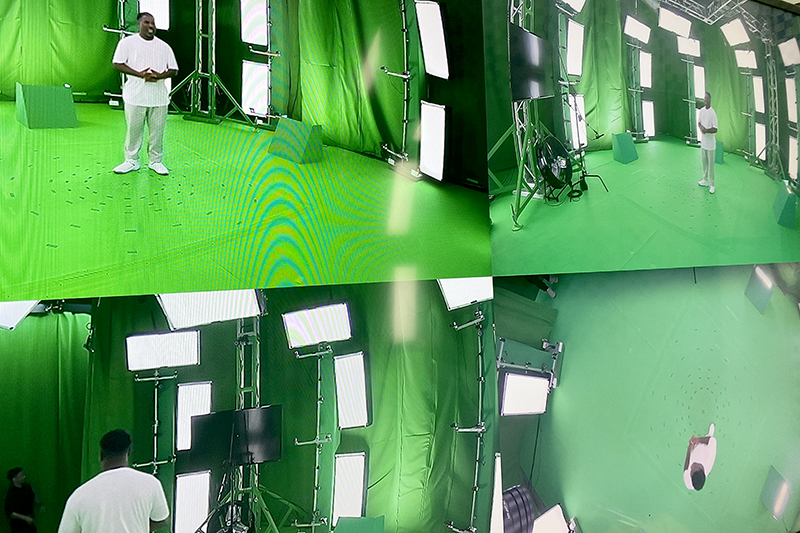
IMOD uses emerging technologies as tools for access rather than as spectacle. Some are already in use, while others are in active development. These include HoloLens and 3D visualization, holoportation, motion tracking, immersive sound environments where sound responds to movement, and wearable technologies that translate embodied experience into sensory data.
These tools are not meant to replace live dance, but to expand how people can encounter it, physically, emotionally, and intellectually, especially for those who may not otherwise feel that dance is for them.
Can you give some concrete examples of the education program?
IMOD’s education program is intentionally not one-size-fits-all. We are building our Global Education offerings to include dance from every diaspora with one non-negotiable principle: the educators we work with are at the top of their fields.
We partner directly with school districts and communities to understand which dance forms they want to deepen and expand. IMOD currently works with the San Francisco Unified School District and Berkeley Unified School District and is developing programs in Philadelphia. Our programming spans elementary through high school students, as well as educators and administrators, through classes, workshops, assemblies, and professional development. Last year, IMOD reached over 20,000 students in just two months, with continued growth this year.
Are there one or two educators, artists, or administrators IMOD has supported who you can share more about and why IMOD supported them?
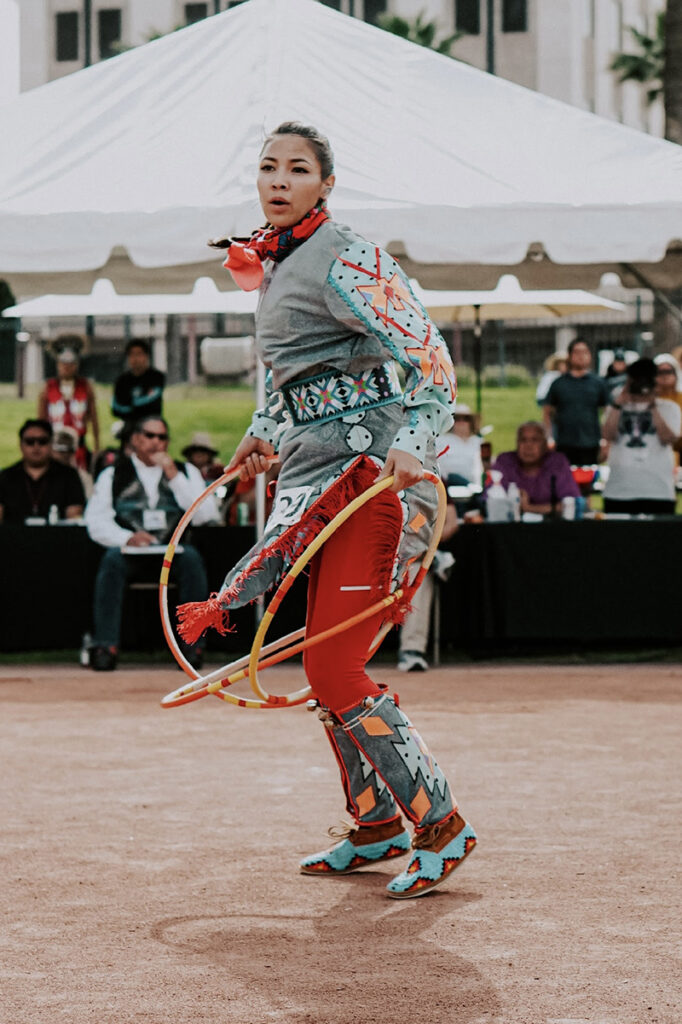
Our current Global Educators include internationally recognized artists across body percussion, hip hop, and Native hoop dance, including MOLODi, Clyde Evans Jr., Shandien LaRance, and James Jones. By centering both cultural breadth and excellence, IMOD elevates dance education while building a global network of educators shaping the future of the field.
Can you share more about IMOD’s archives? Where can one access IMOD’s archives?
Our archives work is about storytelling and connection. We focus on how dance travels across time, geography, culture, and people. Movement does not exist alone. It arrives through lineages, collisions, influences, and shared human experience. IMOD makes that visible.
IMOD’s archives will be accessible through a combination of digital platforms and public-facing partnerships. We are currently under contract with two very exciting partners and are not able to share details publicly just yet.
We invite you to circle back with us this fall, when we’ll be able to share much more about how and where these archives will be experienced!
Dance is such a huge umbrella term. How do you approach representation at IMOD?
Dance is one of humanity’s oldest technologies for connection. It has always reflected who we are, where we live, and what we are responding to.
IMOD approaches representation by refusing to flatten dance into categories or hierarchies. We highlight relationships rather than boundaries. We show how dances evolve, intersect, and respond to social, political, and environmental realities. Representation is not a program at IMOD. It is the foundation.
What is IMOD focused on right now?
Right now, IMOD is expanding and deepening its Global Education Program. We are working directly with schools and communities, elevating exceptional dance educators, and building mentorship pathways in arts administration and leadership for a new generation.
At the same time, we have clarified our role in the dance ecosystem. IMOD is not here to duplicate automated processes or short-term trends. Our work is meaning-making. We connect movement to people, place, technology, and time so that dance remains visible and relevant.
What’s next for the International Museum of Dance?
What’s next is bold and tangible.
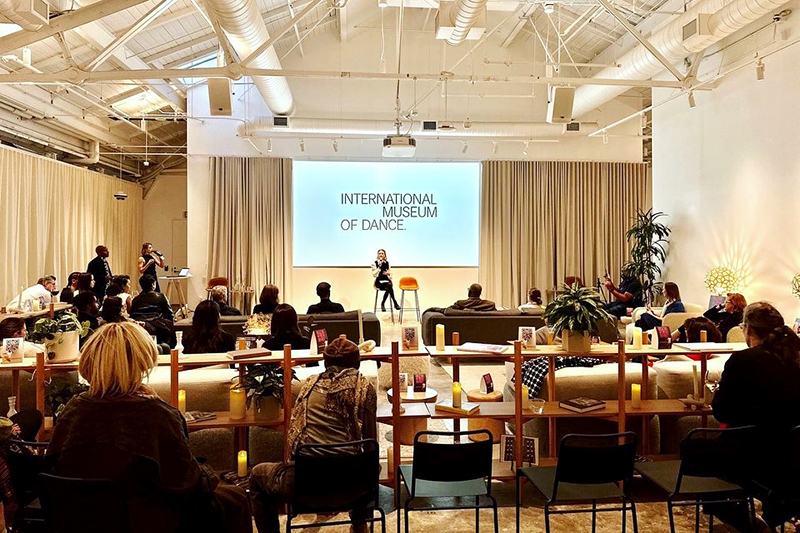
IMOD is ready to build a beautiful, welcoming, community-centered museum building. A place designed for movement, gathering, experimentation, and return. A place that belongs to its city while remaining globally connected. This building will not be a monument. It will be a civic engine that celebrates humanity through dance.
I assume this building would be in Santa Fe or San Francisco, where you personally have connections?
Not necessarily. The world is changing rapidly, and IMOD is intentionally keeping its options open. We have explored the idea of multiple brick-and-mortar “lighthouses” around the world rather than a single fixed location.
What matters most is building in a place where IMOD can truly serve, where the arts are a civic priority, where forward-thinking ideas are supported, and where long-term sustainability is possible. That could be San Francisco. It could be Paris. It may also be influenced by where key philanthropic partners are based, as well as by climate and geopolitical considerations. The goal is to build for the future, not for nostalgia.
What does that mean to belong to the city while remaining globally connected? How far along this project is it to being realized?
Belonging to a city means contributing meaningfully to its cultural, educational, and civic life. IMOD’s physical space would serve local communities while acting as a hub for global exchange.
Through our Global Education Program and archival storytelling initiatives, IMOD is developing long-term partnerships with educators, artists, and institutions around the world. The building centralizes these stories and experiences, but it does not limit them. IMOD’s work is designed to travel across borders, cultures, and generations.
IMOD is approximately five years into its development. We have completed our foundational research and programming work and are now focused on strengthening our brand, expanding partnerships, and building long-term financial support.
We have had early conversations with the City of San Francisco, though the outcome of those discussions is still evolving. A museum building requires not only a physical structure, but strong content, community alignment, and sustainable funding. IMOD is deliberately building those elements now to ensure that when the building is realized, it is both meaningful and resilient.
IMOD has completed its research and development years. We are now focused on growth, expansion, and long-term impact. We are actively building relationships with foundations, philanthropic leaders, and visionary supporters who recognize both the scale of this idea and the strength of what already exists.
IMOD is not an escape from the world. It is an investment in it. In our expressions. In our planet. In our shared future.
~~
To learn more, visit www.internationalmuseumofdance.org.
Responses
There are no comments at this time.
Be the first to start the discussion by filling out the comment form.