50 Years at the Nexus of Art and Social Justice
January 12, 2026
An Interview with Krissy Keefer, Artistic Director of Dance Brigade
BY EMMALY WIEDERHOLT
Photos by Robbie Sweeny
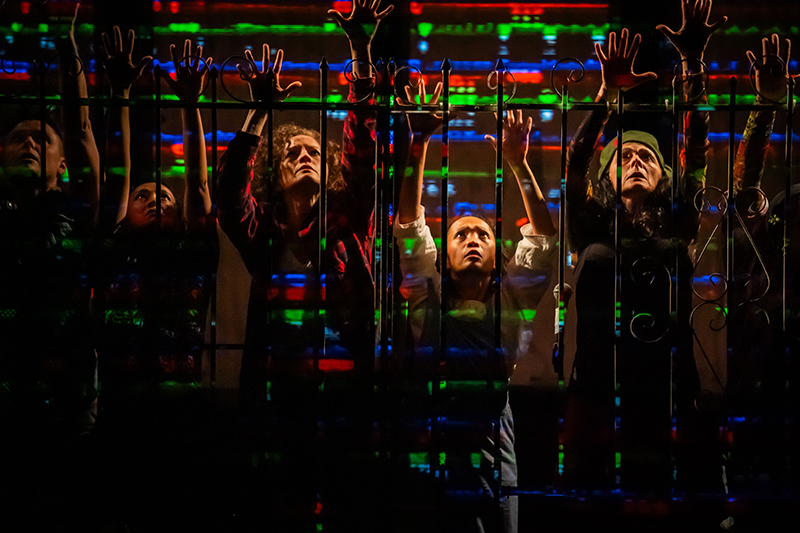
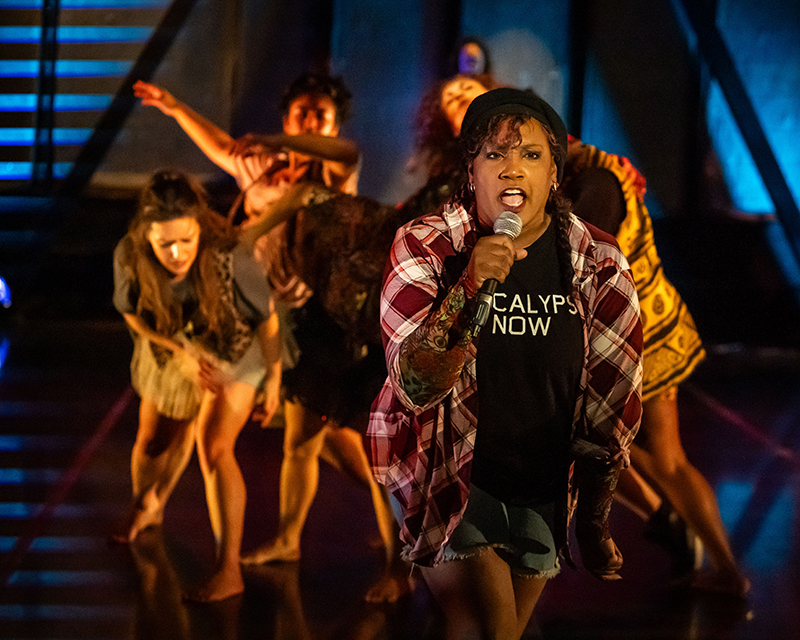
Krissy Keefer is the artistic director of Dance Brigade, a San Francisco-based dance company that has been exploring the intersection of art and social justice for decades. Dance Brigade will be performing their newest work, Match Girrl, January 17th through February 1st at their home theater, Dance Mission Theater in San Francisco. Match Girrl wraps up Krissy’s 50th anniversary celebration season; Krissy started creating work in 1975 as part of the Wallflower Order Dance Collective. Here, Krissy speaks to her inspiration to create a contemporary version of the Hans Christian Anderson story The Little Match Girl that responds to the current drug epidemic. Krissy also reflects on 50 years of making work, what has changed, and what inspires her to keep going.
~~
What was the impetus of your upcoming piece Match Girrl?
When I was a ballet dancer in Cincinnati where I grew up, we did The Little Match Girl as a holiday performance as part of our school. I was familiar with the story. Although it has a terrible ending for the match girl, I was interested in the story because it has a lot to do with poverty. Since COVID, San Francisco has been immersed in drugs and poverty. I was helping my significant other in the Tenderloin during COVID to orchestrate murals. I saw the complete melding of drugs and poverty. It was so horrible to witness and watch. There are so many children in the Tenderloin who have to walk through such horrible conditions. It’s awful. I started reading and listening to podcasts on why the situation was so terrible. The economic crash of 2008 seemed to generate where we are now, even though it was so long ago. It was a defining factor in the economy. It probably didn’t get as much attention, because afterwards came the whole tech and Silicon Valley takeover of San Francisco. I wrote the first version of Match Girrl, which was shown in 2023.
What was your choreographic process?
Dance Mission Theater is by the 24th Street BART station, and there have been so many people sleeping in the alley and shooting drugs in the alley or on the BART plaza. Since COVID, there’s also been a whole movement of primarily immigrants who set up shop on the BART. There’s a free form market for stolen goods. Then there’s how expensive it is to live here in San Francisco, much less how expensive it is to live in the US. I’m trying to add some of that stuff into the show. I need to address what’s happening, especially with Trump. I’m bereft about Gaza and bombing boats in Venezuela. It’s a full-fledged assault on humanity. We’re in the last throes of the empire. It’s terrifying to watch.
When I was in the Tenderloin doing the murals, there was so much drug addiction. One night I was walking down the BART across from American Conservatory Theater, which had a huge group of people living in front of it. I looked down the stairs from the top of the BART station, and in every corner all the way down was someone shooting up drugs. This was way beyond the casual individual who gets addicted to drugs. It looked like it could have been out of a dystopian movie.
Part of the idea that I’m dealing with in the piece is that in the US, you think you’re going to be a movie star. In my version, there’s this girl gang of motorcycle fairies who take care of the match girl and lure her into her fantasies. What is the motorcycle mythology? Is it an aspiration or a hallucination? A big part of The Little Match Girl story is she strikes a match and sees a hallucination. Is it reality? Is it metaphor?
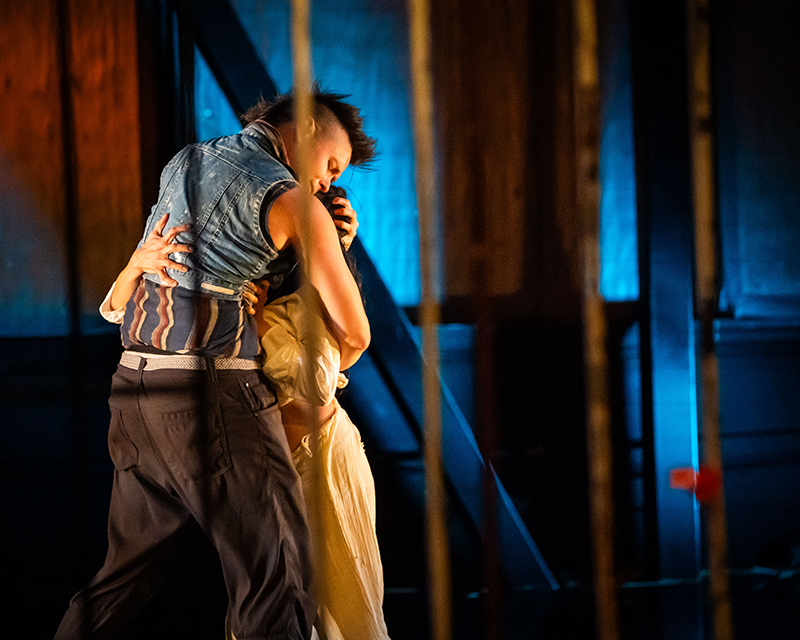
The first time we did the piece was heartbreak. There are so many people who are dealing with people who are addicted. It touches everyone. Everybody has lost children or relatives to drugs. It resonates even if it’s not your personal experience on the streets. There was one member of the cast whose sister had just died of a drug overdose. We had people whose family members were living in SROs (single room occupancy). We even had people in the cast who used to be addicted to drugs.
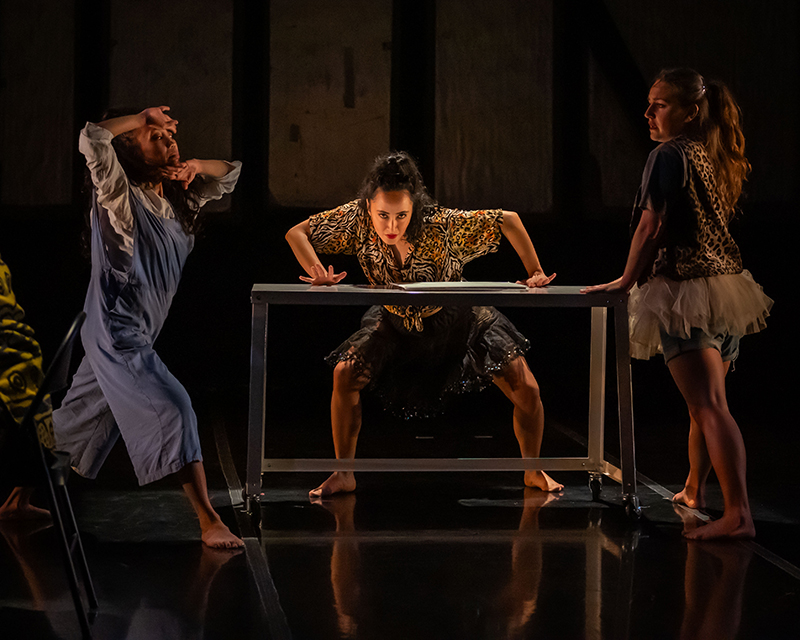
We gave personality to other people on the streets, which reinforces the idea that they are all the match girl in a way. Frances Sedayao plays the main character. Megan Lowe sings quite a few songs woven throughout the piece. We have a scene with bungee cords between the very wealthy and the artists who are there to entertain them. We have a whole scene where five people are talking about their family members who are addicted.
Match Girrl is the culmination of Dance Brigade’s 50th anniversary celebration season. Looking back over the past five decades, what are some ways your choreographic process has evolved over time?
Fifty years ago, I was in the Wallflower Order Dance Collective, and we made the majority of the work collectively, which had its joys and sorrows. If you’re not ready to run a company by yourself, it’s a great way to share choreographic responsibility. It generates a familiarity and friendship that was part of the collectives of the 70s. Collective was the model we all worked around, especially coming out of Eugene, OR. We were part of that women’s community scene. For the first two years, I choreographed with all the other dancers, and then after two years, we started dividing things up. Working collectively can eventually be a burdensome process, and you can end up fighting over things that are very low consequence. It doesn’t stay all love and light.
I drove the narrative of the Wallflower. I was responsible for figuring out how the work all fit together. I think internal narrative is actually the genius of my work, not the actual choreography. I don’t know any choreographers who actually choreograph their own work. Mostly their dancers come up with the steps. The internal message of what I’m doing is more important than the actual steps. My work is about what I’m interested and immersed in at the time. I’ve learned a lot over the years from watching my colleagues and what they are doing. Good work is hard to make, period.
Your work with Dance Brigade has always been situated at the intersection of art and social justice. How have you kept going for 50 years and not become disillusioned?
I’m terrified. And I’ve never been really scared before. I always thought we were privileged enough to wax poetic forever. How do I keep going? To be honest, I don’t have any retirement. If someone were to personally give me a couple million dollars, I might switch gears. I also love the people that I’m working with. Sarah Crowell, Karen Elliot, Kim Valmore, and Lena Gatchalian have worked with me at Dance Brigade and then Dance Mission since the 80s and 90s. These are 35-year relationships that hold me together, hold the work together, and hold the community together. I’m motivated to hold Dance Mission together for the community.
How have you seen the dance landscape change with regard to art about social justice during your long career? Is there more of it or less of it? Has it evolved?
Pre-Trump, it was the only way you could get any funding. You could not get a grant unless you had a social justice component. You needed to have a DEI statement. You needed to have diversity on your staff. I don’t know how it’s going to shake out after Trump. Just like the organizations that are dropping their DEI push, I imagine arts organizations will do the same. In order to get a California Arts Council grant, you have to have a DEI statement on your website, but now the National Endowment for the Arts won’t fund you if you have a DEI statement on your website.
Like some of my white male colleagues say, this is what we fought for. We fought for a wider scope inside the funding world, for artists of color especially. This is what we wanted to happen. When we are no longer funded, it’s painful, but it’s what we were striving for.
I personally feel like my work was completely jumped over. I didn’t get a single dollar for Match Girrl. I have been doing this work for a super long time. I get grants for Dance Mission Theater because I help other people. That was partially my motivation for taking on Dance Mission: I needed infrastructure for my own work, or I would have had to quit. I needed a diverse income stream to last. Everyone who is a long-term choreographer has had to build infrastructure around them. All these dance empires start with individuals who are just trying to make their work. But what happens when the individual founders who worked for free for so long retire? Who’s willing to take on the helm?
Do you have a sense of what’s next?
We launched a big fundraising campaign to raise a million dollars. We have our lease for five more years, and if we raise the money, we’ll be able to stick around past 2030. We’re trying to get ahead of the game by getting our coffers full so we can be in a position to negotiate.
~~
To learn more, visit dancemissiontheater.org.
Responses
There are no comments at this time.
Be the first to start the discussion by filling out the comment form.