The Geography of Memory
October 19, 2026
BY MARY TRUNK
Images by Mary Trunk
Note: This essay was published in Stance on Dance’s Fall/Winter 2026 print issue. To learn more, visit stanceondance.com/print-publication.
We had 25 minutes to evacuate.
A wildfire was approaching, fast and unpredictable. Embers moved through the air in a frantic dance. Inside the house, my body couldn’t find its rhythm. I moved, then stopped. Reached, then froze. My instincts fractured. Everything held equal weight.
How do you choose what to carry when your life has been built through accumulation, repetition, and years of embodied experience? I couldn’t imagine my life in fragments.
Now I can.
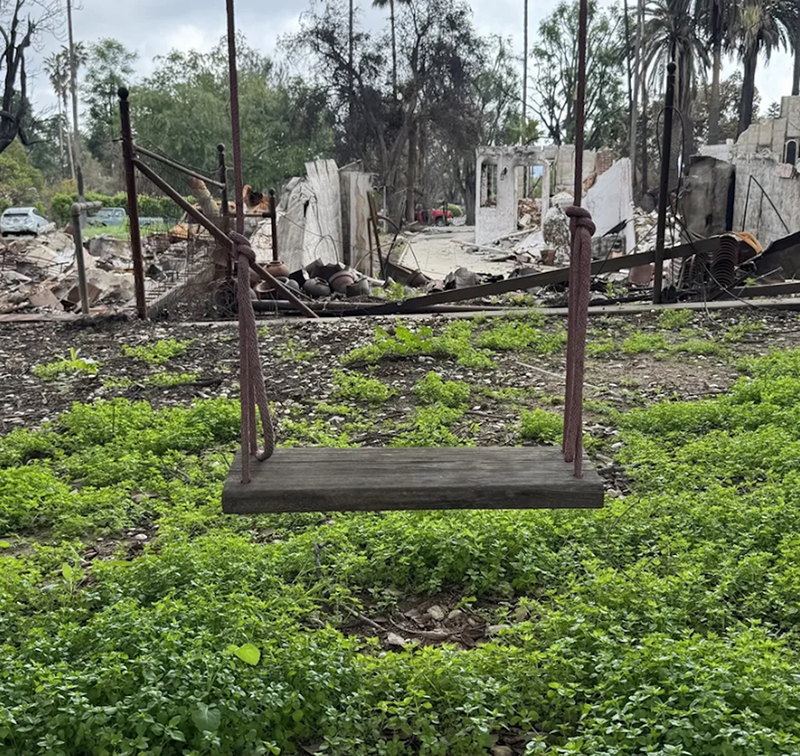
I packed quickly. Dirty clothes mixed with clean. Essentials without meaning. I left behind notebooks, years of choreography ideas, and traces of a dancing life. The body remembers, I told myself, but I wonder what is lost when the artifacts of that memory disappear.
Now we are beginning again. We are in a new home. It does not yet hold our patterns, our gestures, our weight. I move through it, but it does not yet move through me.
I want to walk through the old house the way I used to. To pass the framed photo of my mother as a toddler beside her twin sister and feel the small pause my body always made there. To return to the photo of my sister’s engagement party, the heat of that day still alive inside the image. I think about the paintings: one too large for the bedroom, taking up space the way a body insists on being seen; and Mike’s painting, the man on the corner with his hands raised, caught in the middle of what could have been one of my dance phrases. I recognize that posture. I’ve been inside it.
I keep thinking about repetition. The towels I folded over and over again. The small, unnoticed choreographies of daily life. The habits that live in the body long after the objects are gone. What happens when those objects burn? Where does that movement go?
The mirror that once reflected us. My husband’s hats. Our daughter at the beach, captured mid-motion. These images were never still. Now they move differently, only in my memory.
I wonder what the fire did to all of it. Not just to the objects, but to the gestures attached to them. The weight. The way my body knew how to exist in that space.
Most of us imagine that losing everything in a fire is the worst thing that can happen. And yet there are losses that cut deeper. Not more dramatic, but more disorienting.
What I lost before the fire was control. Not all at once, but quietly. Control of my body as I had always known it: familiar, responsive, predictable. Even when I had been injured, I understood the terrain. I trusted that normal was waiting for me.
And then normal disappeared.
It didn’t vanish in a single moment. It slipped away slowly. Small changes at first, things I thought I could shake off.
I was in France, filming for the university during a brutal heat wave. One afternoon, walking back to the hotel alone, I stopped in a small museum shop to buy T-shirts for my husband and daughter.
That’s when I felt it.
My left leg was dragging, just slightly. So slightly I almost dismissed it. The kind of sensation you explain away: exhaustion, heat, dehydration. I tried to shake it off.
I couldn’t.
I was sweating, disoriented, struggling to communicate in a language I didn’t speak. Underneath all of that was another feeling, quieter but more insistent: the sense that something was wrong in a way that would not be easy to fix.
That was the beginning.
What followed were months of searching for answers through acupuncturists, chiropractors, physical therapists, and increasingly questionable forms of treatment. Nothing changed. If anything, my body moved more slowly, less reliably, as if it were drifting further away from me.
At one point, lying on a table while a bodyworker instructed me to close my eyes and scream, I realized how far I had gone looking for a solution.
Too far.
Even the chiropractor who had first greeted me with complete certainty that she would fix me eventually paused and said, almost reluctantly, “Maybe you should see a doctor.”
So I did. A neurologist delivered the first clear truth: something was wrong, and I would need a specialist. Getting an appointment would take time.
I paid out of pocket to see someone sooner, someone who immediately recognized what I had and also made it obviously clear I didn’t want to be in his care. Through a friend, I eventually found the right doctor, someone I trust.
It was February 2020, just before lockdown.
Several years before the fire, I started a project called The Geography of Memory. At the time, I thought I was asking simple questions. Where does memory live? In a place? In an object? In another person? In the body itself?
I didn’t realize those questions were quietly preparing me for my own life.
As my body began changing, I noticed something unsettling. I could still feel movements I could no longer perform. Somewhere inside me, the memory of a triple pirouette remained perfectly intact. The movement still existed. It simply lived in a different place.
That realization changed the project. Memory wasn’t something I could illustrate; it had become something I was inhabiting.
I began with dancers learning choreography built from ordinary actions: making a bed, folding laundry, washing dishes, setting a table. These movements were so familiar. Yet once repeated, slowed down, and shared with another body, they became unexpectedly emotional.
As the dancers improvised together, new memories entered the work. Their experiences intertwined with mine until it became difficult to tell where one person’s history ended and another’s began.
One of the places we filmed was my home.
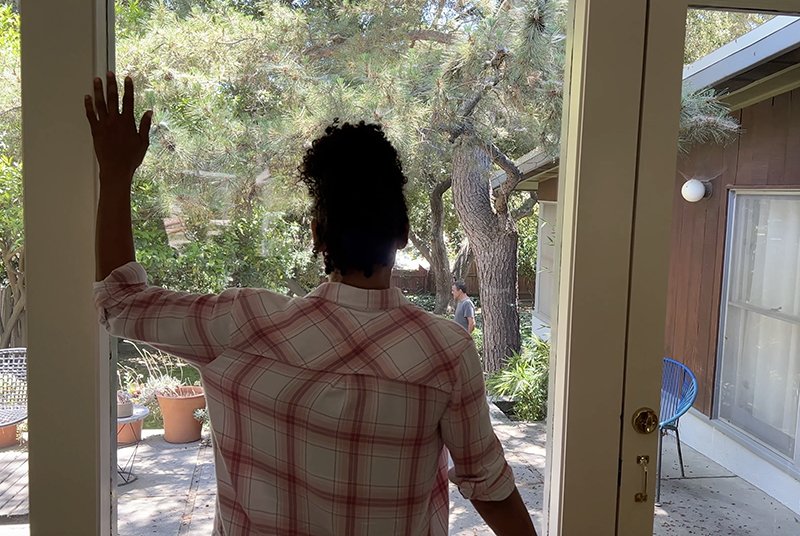
The dancers wandered through hallways, paused in doorways, leaned against windows, and let the architecture shape their movement. They weren’t performing inside the house so much as listening to it. The rooms answered back through light, texture, and the accumulated gestures of everyday life.
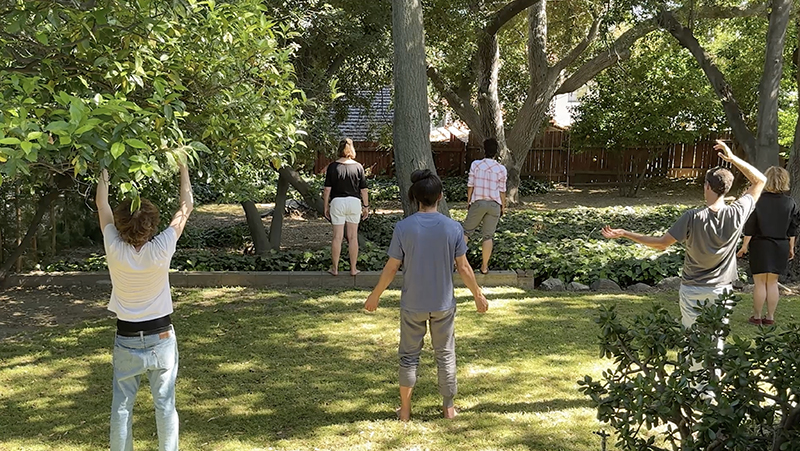
At the time, I thought we were documenting dancers in this unique place. Now I realize we were preserving a conversation with a house that no longer exists.
Filming became its own dance. While holding the camera, I wasn’t standing outside the choreography; I was inside it. Every shift in a dancer’s weight required a response from my own body. The camera extended my movement, asking me to anticipate, follow, hesitate, and decide what stayed in or out of the frame. In those moments I found myself dancing again.
The project kept expanding. Hundreds of one-minute Instagram stories, old home movies I had filmed decades earlier, new dance films, writing, sound, and photographs began layering over one another. Instead of telling a single story, they behaved the way memory behaves: looping, interrupting itself, returning unexpectedly, allowing the past and present to occupy the same moment.
A question I hear often is, “Are you going to rebuild?”
I don’t see it that way. Bringing back what once was seems impossible. The memories of my former home are a shifting collage of images, sounds, gestures, emotions, and relationships that continually transform, vanish, and return. I prefer to reimagine and reinvent what home means now.
I suspect the fire has changed the way I see everything: how I remember the past, how I move through the present, even my reluctance to imagine the future. Disaster rearranges perspective. Certain memories rise to the surface not because they are the most important, but because the lens through which I see them has shifted. I never expected to find myself asking how memory lives everywhere.
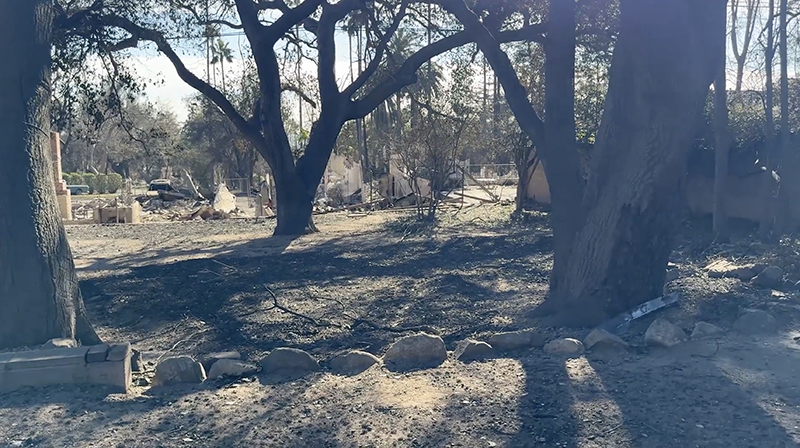
When I visit the lot where my home once stood, it seems smaller. I am losing my sense of where our bedroom was, where the kitchen began, where our neighbors’ fences started and ended. In my imagination, boundaries dissolve. Walls and rooms slip away. The house becomes less architectural and more sensory.
I remember a birthday party for my daughter when a raccoon ran through the yard in the middle of the day. The smell of lavender beginning to return after most of it burned. I am carried along by sensations, by a kind of deconstruction of the house that has become part of my path toward reimagining and reinvention.
The garage appears in my mind, and I search through it with my mind’s eye, taking inventory of what was there. I remember my old college portfolio, something I had not opened once since before I moved into the house. Now I want to see the drawing again of the dead roses. But I won’t. Instead my mind wanders further back, toward the story of how the roses were stolen.
Sometimes reimagining is too big. I can’t hold the entire home in my mind yet. So I begin with the front door first, a blue door. I see people entering and exiting. I think about exterior doors differently from interior doors. How does a body move when it leaves, slams a door, tries to sneak out quietly, locks and unlocks? What does it feel like to map the house in my mind by passing again and again through its doorways?
The door is full of movement ideas. It is already choreography.
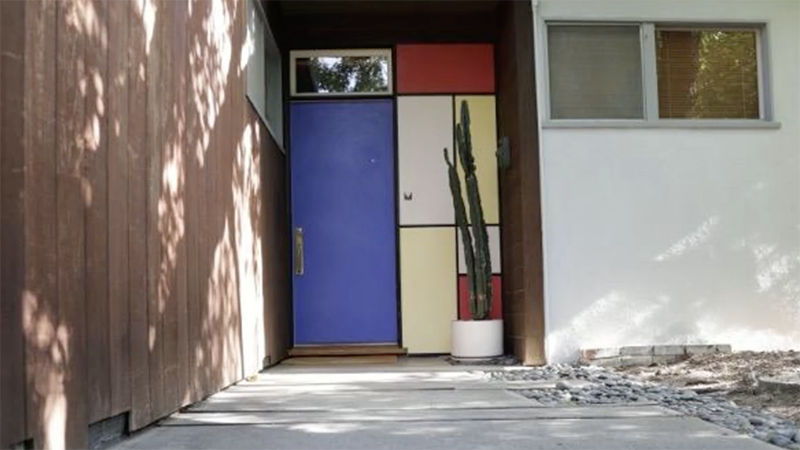
The deconstruction continues, pulling apart different elements of the house. I want to exhaust my memory and let it wander, embellish, erase, and reframe itself. Each fragment shifts between the physical and the ephemeral.
My brother reminds me that we had a full drum set in the middle of our living room, something I had gotten so used to that I almost forgot it was strange. I lived with it every day. It became part of the tapestry of that room and the rest of the house.
I imagine immersing myself in drums and in the motions a body makes while playing them. My husband, who could play them well, and the many guests who sat there and banged on things with little delicacy, will become part of a series of movements, sounds, and images.
This reimagining makes sense to me because a home never stays the same. People visit childhood homes and return saying how small they are now, as though the house changed instead of the body looking at it.
The empty lot where my house stood is now a real geography of memory. And yet it also changes and evolves because of weather, wind, rain, and new growth. Recently, acacia plants had multiplied so much that I could no longer walk to the very back of the lot, where the wooden swing our daughter had played on since she was a toddler was still intact after the fire. Twenty years earlier, I had filmed her there, counting to 100. That footage now feels inseparable from the landscape of memory itself.
The site carries other histories as well: a Holocaust survivor who built the house in 1948, bookstore owners who once lived there, a family who sold their wedding china and silver to restore its postmodern design.
The geography of memory also lives within me—in my muscles, my cells, the habits of my body. My body has become a landscape of its own, always changing. It cannot remain fixed. It cannot be preserved.
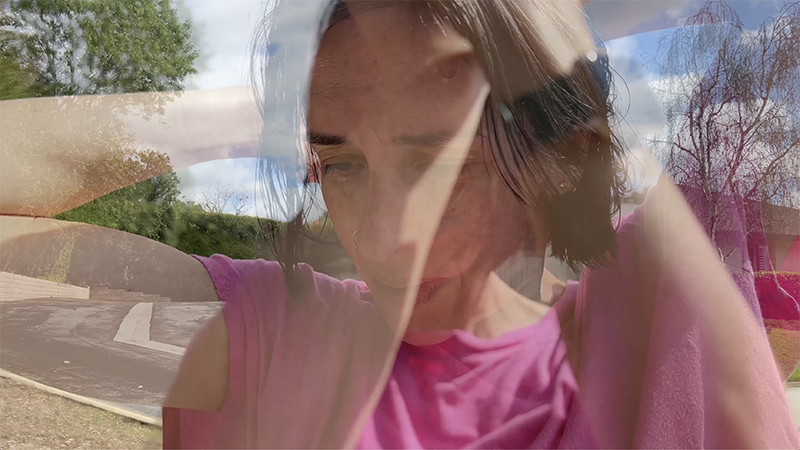
I resist naming what is happening to my body except to say that I am adjusting to this new personal geography of memory, reinventing myself as a dancer by using a camera.
Naming feels too final, as though it might fix something in place before I understand its shape. When my medication fades, my body slows while my mind races ahead. Thought and motion drift apart, as though the rope between them has frayed. My mind remembers speed; my body resists it.
Until I take another dose.
The fire altered the terrain too. Home no longer exists as I once knew it, and time has fractured into segments I must constantly negotiate. Space has been reduced to what we could fit inside a Prius.
I am beginning to think my geography of memory is not made of events themselves, but of the negotiations they leave behind: between thought and action, between what was and what remains, between holding on and letting go.
People, objects, and homes become more than one thing at once: part experience, part reconstruction, part invention. They belong to a geography that is always shifting.
The world is constantly being rearranged, just like memory. And just like a body in motion.
~~
To learn more about The Geography of Memory Project and to receive updates about upcoming iterations of the project, visit www.geographyofmemory.com.
Responses
There are no comments at this time.
Be the first to start the discussion by filling out the comment form.