Dance Isn’t What It Used To Be
February 9, 2026
BY EMMALY WIEDERHOLT
“The theatre isn’t what it was.”
“No. And I’ll tell you something else. It never was what it was.”
From I, Claudius, the 1976 TV Miniseries
Last December, I had the honor of interviewing Krissy Keefer of Dance Brigade and Dance Mission Theater for Stance on Dance, and then a few minutes after getting off the call, interviewing Teo Lin-Bianco, Tatianna Steiner, and Ella Wright of Tether Dance Project for Stance on Dance. Krissy was celebrating 50 years of creating choreography. Tether Dance Project had produced its first professional show last fall, an evening of emerging choreographers. Even though I do not live in San Francisco, I spent my formative years as a dancer in my early and mid-20s in San Francisco, and because of my personal experience, each interview spoke to me on different levels.
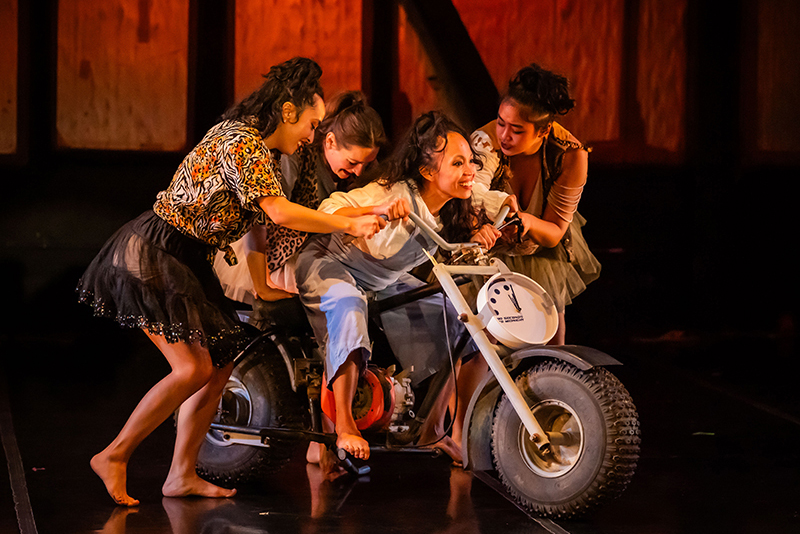
Dance Brigade in Match Girrl, Photo by Robbie Sweeny
Dance Brigade is a San Francisco-based dance company that has been exploring the intersection of art and social justice for decades. It is housed in Dance Mission Theater. When I lived in San Francisco, Dance Mission was a hub for performance and community classes. Based on my research and reporting, it still is. Krissy’s work has always been community-forward, and I have long admired her commitment not only to the dance community, but also to San Francisco’s marginalized communities.
Tether Dance Project is a new nonprofit presenting performances, workshops, and community-building around modern dance and performance art. Initiated by recent UC Berkeley graduates Teo Lin-Bianco, Tatianna Steiner, and Ella Wright, the trio are working to create opportunities for themselves and other emerging artists. I was impressed by how this trio is carving their own path and making opportunities for others, especially so early on in their own dance careers.
Slightly related, I’ve lately seen a wave of doom and gloom about the arts scene dying in San Francisco. California College of the Arts (CCA) announced its closure at the end of the 2026–2027 academic year due to financial issues, following the earlier closure of the San Francisco Art Institute (SFAI) in 2022. Additionally, a notable number of art galleries and art-related institutions have recently closed or shifted their models in San Francisco. Even before I moved out of the Bay Area in 2013, there was a feeling that the dance sector, and the arts sector more generally, was contracting. I can think of a handful of dance studios, venues, and training programs that have since closed: San Francisco Conservatory of Dance, Mills College Dance program, LINES year-round training program, SAFEhouse Arts, and Margaret Jenkins’ studio, to name a few off the top of my head.
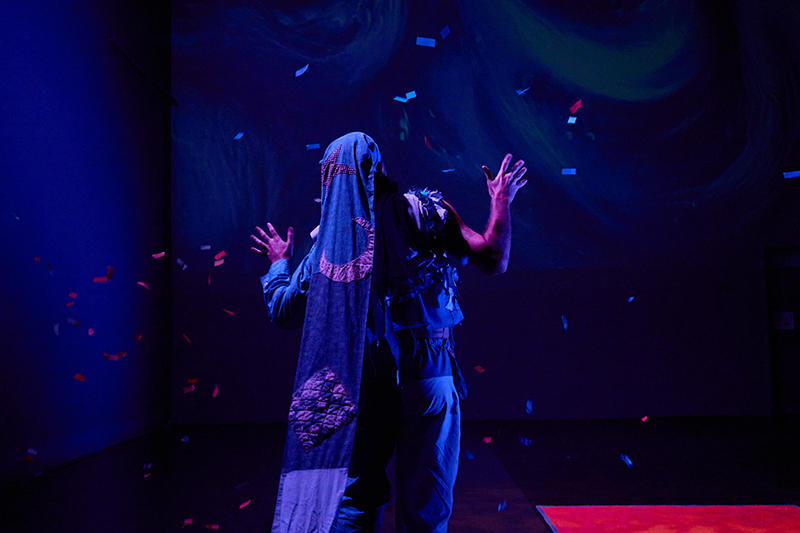
Honk. boom. BAM! (excerpt), directed and performed by Matty Mx! / Matt Barry in Tether Dance Project’s showcase, Photo by Michelle Castillo
In Krissy’s interview, she spoke of needing a diverse income stream and infrastructure for Dance Brigade to last, and that is why the company took over Dance Mission back in 1998. Dance Mission is currently running a big fundraising campaign to raise a million dollars to try to stick around past 2030. Over the years, Dance Mission has faced significant challenges that threatened its closure or forced relocation on multiple occasions, primarily due to rising operational costs and rent increases.
I start to feel like this business of dance is only for the rich folks or the self-flagellating crowd, and perhaps it is, but then I speak with young artists like Teo Lin-Bianco, Tatianna Steiner, and Ella Wright who are not waiting for funding or opportunities to present themselves, and I feel inspired. It’s the same way Krissy got her start 50 years ago. From my vantage point, there will always be a wellspring of young people who are motivated to have an adventure in the big city and make their art, whether they make money or not.
Who knows whether Tether Dance Project will be around in 50 years. I certainly hope so, but I suspect even if it is, it will be in a dramatically different form. Artists almost always start young and idealistic, and then we weather. It’s not just the economic reality of constantly having to fundraise and/or work for free. It’s the bigger picture of how much it costs to buy a home, to have a family, to age. It’s no secret that the Bay Area is one of the least affordable places to live in the country. Most dance hubs nationally and internationally happen to have very expensive housing markets.
I am rooting for the Krissy Keefers of the world who make space for community to grow, and I am rooting for the Tether Dance Projects of the world who believe anything is possible. I want dance to succeed. Is it what it used to be? No, but it’s always been precarious. Is the dance world contracting and whim to economic forces? Probably, and often in cycles. But will there continue to be people who want to dance, who want to make dances, and who want to share their love of dance? Always.
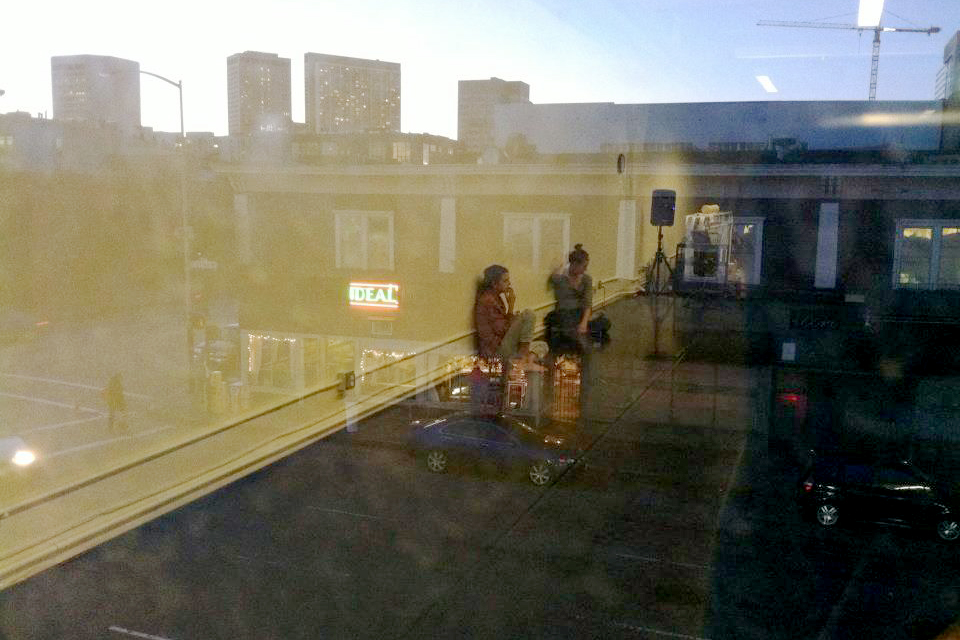
Malinda LaVelle and Emmaly Wiederholt at the San Francisco Conservatory of Dance
~~
Responses
Thanks Jamie!
I didn’t know about all the changes in the Bay Area, and I’m sadly not surprised. I appreciate your bringing to light that dynamic tension between loss and hope. All power to the new generation!
Hello Ms. WIEDERHOLT!
I’m just curious– can you remember which episode and who is speaking in the quote you offer from one of my all-time favorite series, “I, Claudius”?