From Protection to Pleasure
December 8, 2025
Emotional Unarmouring in Improvisation
BY NIKHITA WINKLER
Photos by Willem Vrey
Note: This article was published in Stance on Dance’s Fall/Winter 2025 print issue. To learn more, visit stanceondance.com/print-publication.
She came in armoured like a warrior – shoulders high, breath guarded, voice barely humming. But I could feel her wild woman panting beneath: hungry for soft sensation, for presence, for love – not just protection by force.
For the past two and a half years, I’ve been guiding women through somatic improvisation, helping them step out of their armour and into pleasure, presence, and feminine power. This isn’t just about “feeling better.” It’s about unarmouring – dismantling the protections that keep us from feeling at all. It’s about letting the wild woman reclaim her birthright.
Over this time, I’ve come to see the process as walking through what I call The Gates of Pleasure. These aren’t techniques you tick off a list; they are openings you keep returning to, again and again.
- Breath: The deeper you breathe, the deeper you can go.
- Sound: A hum in the chest. A moan in the belly. A scream that leaves us trembling. Sound vibrations penetrate different layers of tissue in the body, adding vibrational depth that dance alone cannot.
- Movement: When we’re carrying trauma, the body freezes. Movement, whether a ripple in the spine or a stomp on the ground, melts that freeze and gets energy flowing again.
- Touch: Hands on our own skin bring us into the present, dissolve numbness, and stir feelings we didn’t know were there.
- Presence: The thread that holds it all together. Without presence, breath is mechanical, sound is noise, movement is disconnected, and touch is empty.
These gates are where the unarmouring happens. But before we can step through them fully, there’s one essential first move:
slowing down.

Slowing down: The first crack in the armour
In a fast, information-packed world, slowing down can feel unnatural, sometimes even threatening. We’re conditioned to believe that more and faster is better. Slowing down means we suddenly have space. And when we have space, there’s nowhere to hide from our shadows, thoughts, and feelings. It becomes uncomfortable to feel ourselves so deeply, to be in stillness, with our troubles.
This is where the armours show themselves. In my work, I’ve seen three main ones.
- Speed armour: Moving so quickly there’s no time to feel.
- Chaos armour: Flooding the system with so much intensity that quiet, subtle truths can’t surface.
- Silence armour: Holding the breath, locking the jaw, and staying small so as not to be heard or seen.
When I challenge myself to go slower in my own movement practice, I feel like a germinating seed, slowly unfolding with small bursts of quick movement. The most difficult moments to slow down are those when I find myself in an uncomfortable position. My instinct is to rush through these moments, but I stay committed, reflecting on my capacity to slow down when things are uncomfortable. This practice always makes me feel like a fetus in the tummy, growing my way out of the womb. I believe we are all growing our way out of something.
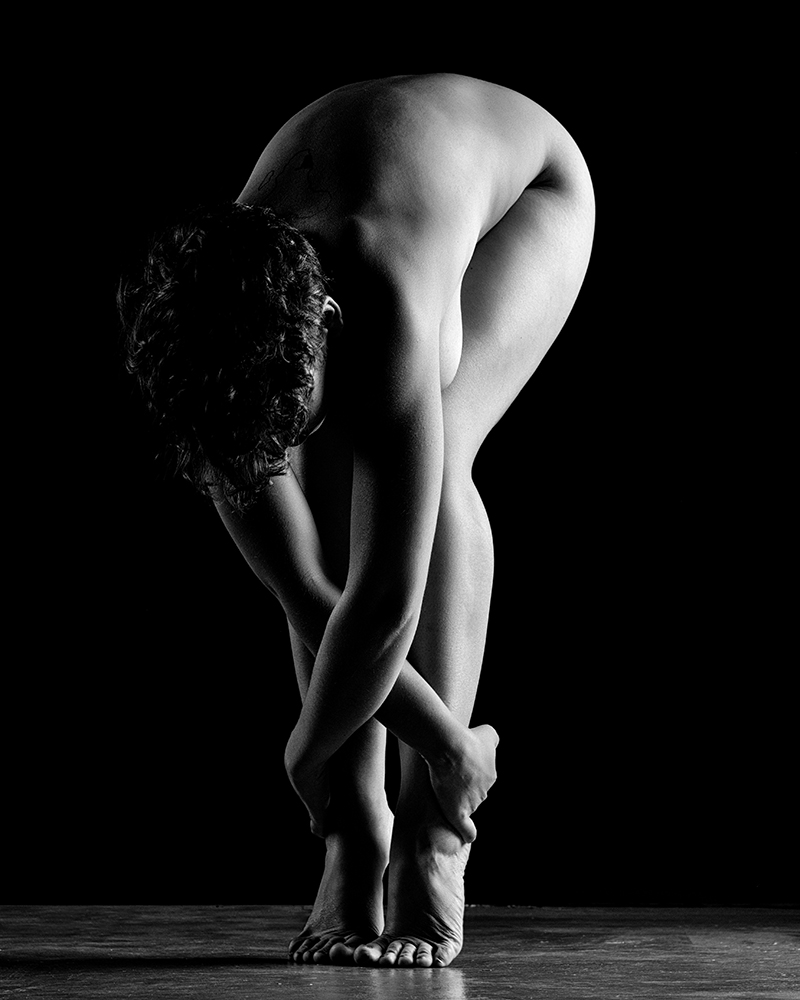
The armour of speed: Lidia’s story
Speed armour often looks like productivity, enthusiasm, even passion – but underneath, it’s a way of outrunning what’s uncomfortable to feel.
We began with breathwork – a daily practice in Lidia’s life – and a necessary grounding to start every session. The air and energy moved between us in expansive inhales and softening exhales. I always have my eyes open to observe her process. Something in Lidia resisted completely surrendering to the softening exhales. Her body showed me that she was not letting go fully.
When I guided her through transitioning into movement, she leaped in too quickly, arms unfurling in grand gestures. It was as if she believed that dance meant explosive motion and that healing required immediacy. Her movements had no journey; each step kept interrupting the previous one, lacking presence and deep listening.
It was no surprise when she stopped, shaking her head. “No. This isn’t working.”
We began again. Sitting against the wall, I told her: “Just the hands. Feel them before you move them. Where are they now? Can you keep them close to you and observe their journey with all your senses?”
Slowly, her fingers awakened, tracing unseen patterns on her body. She started small, tentative. I watched her letting go with every shift of her hands as she connected her entire attention to this part of her body. And then – the shift. Her face flickered between pain, grief, sadness, and release.
Her hands danced to her chest, brushing over her heart, then upward to her face. Her breath deepened as she opened her mouth to release what her hands had touched. Soon she was rolling onto the floor, undulating her hips, her body moving like tides. She released something invisible yet deeply felt, transforming into something wilder, something ancient.
When she returned to stillness, she said softly, “I felt pain in my feet. I didn’t know it was there. Now it’s gone.”
“We don’t dance to forget,” I reminded her. “We dance to remember.”
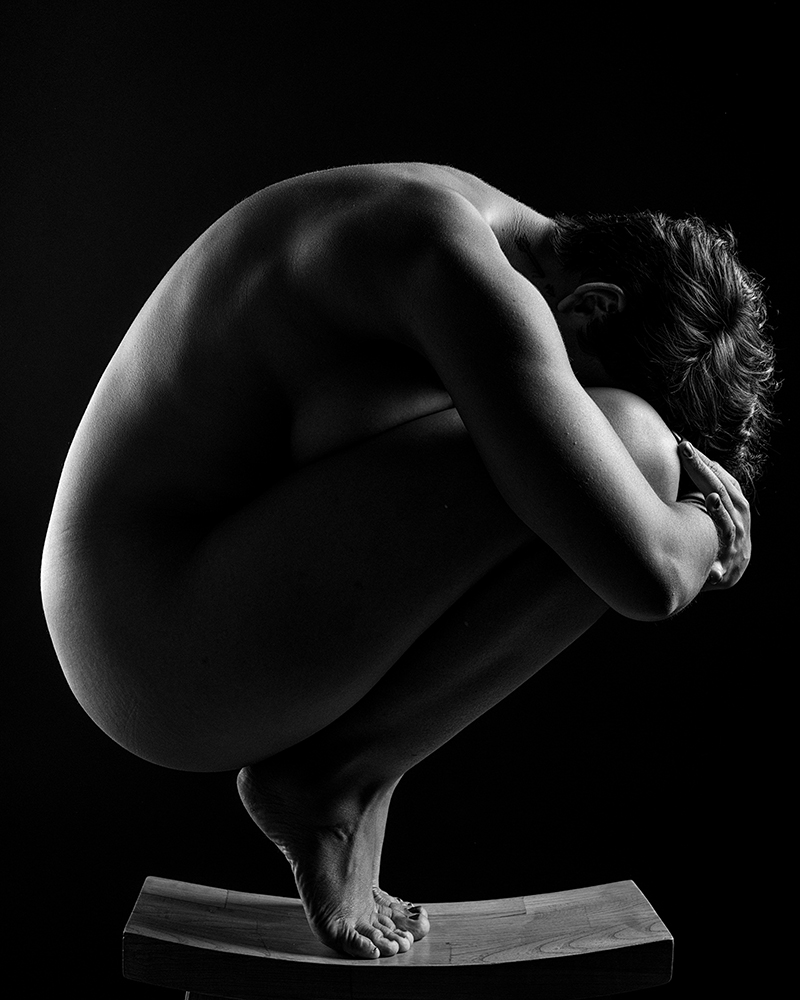
The armour of chaos: Natasha’s story
If speed armour runs from feeling, chaos armour overwhelms it. It’s the storm that can break walls open, but can also become protection itself if it’s the only place a person goes.
From day one, Natasha walked into the space unafraid to release her monsters. For an hour, she would purge – deep, screaming cries, snot all over the floor – taking up space and letting it all out. My role was simple but crucial: hold the space, keep it safe, protect the container.
It didn’t look like dance, but it was: a heavy, primal dance with her inner suffering and deep-seated anger.
Some clients resist going near this level of intensity; Natasha went there instantly. My work was to make sure she didn’t get stuck in the storm – to guide her toward the quiet after the rain, into the dance of lightness, softness, and pleasure. I did this by caressing her body and gently guiding her hands into a dance of effortless feeling. When she was ready to sit up from the ground, I asked her to find the most effortless way to do it.
A theme that kept arising in our work was effort. Natasha was tired of feeling like everything in life required force. It’s a common feeling – life is hard, heavy, exhausting, every step demanding more energy. Some women feel we must prove ourselves in a man’s world.
However, we knew ease once. As children, we were naturally moving through developmental patterns designed by nature to grow toward crawling, sitting, standing, walking, running, and falling with efficiency. When we reconnect with effortlessness in the body, we can tap into it everywhere: in our energy, our beliefs, and in how we meet the world.
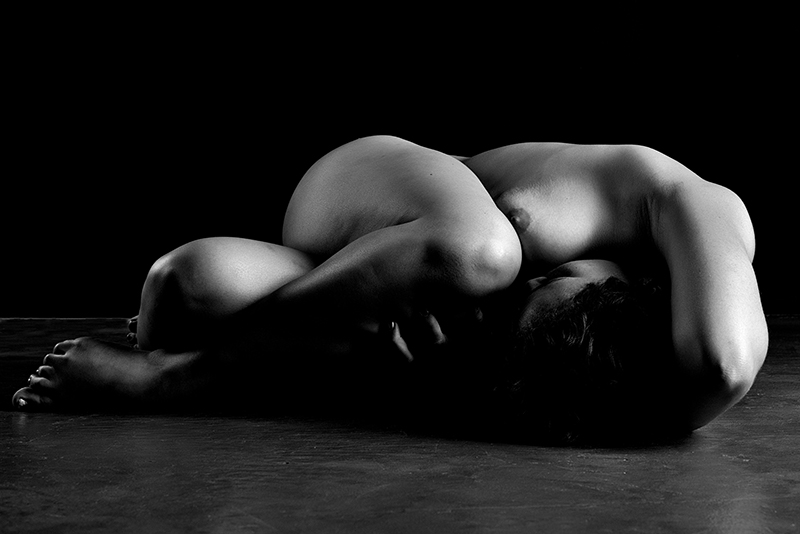
The armour of silence: The forgotten breath and the muted voice
Breath is the first thing we do when we arrive in this world and the last thing we do when we leave it. Somewhere in between, many of us forget how to breathe.
The deeper layer of this armour is forgetting how to let breath and body dance together – how to give breath a sound, a texture, a physical expression.
Anna had an established breathwork practice, but only in stillness. When I asked her to bring her breath into movement, she struggled. I guided her into a position that would give her belly more space – sitting on her heels, knees open. Inhale, rolling hips forward, exhale, rolling them back. Soon, the breath rippled through her spine and into her whole body, adding texture, sound, and emotion to her movement.
Sometimes silence hides in the voice. Jessie had a powerful voice yet kept it locked inside. When she finally let it out, it stopped me in my tracks. Usually I breathe, chant, and moan with my clients, but when Jessie’s voice finally filled the room, I went silent. It wasn’t just sound – it was ancestral power. She told me she had once healed chronic back pain using her voice, but over the years, through motherhood and disconnection, she had forgotten how powerful and healing her voice is.
Breaking silence armour means more than making sound – it’s remembering that breath and voice carry oxygen, history, memory, and identity.
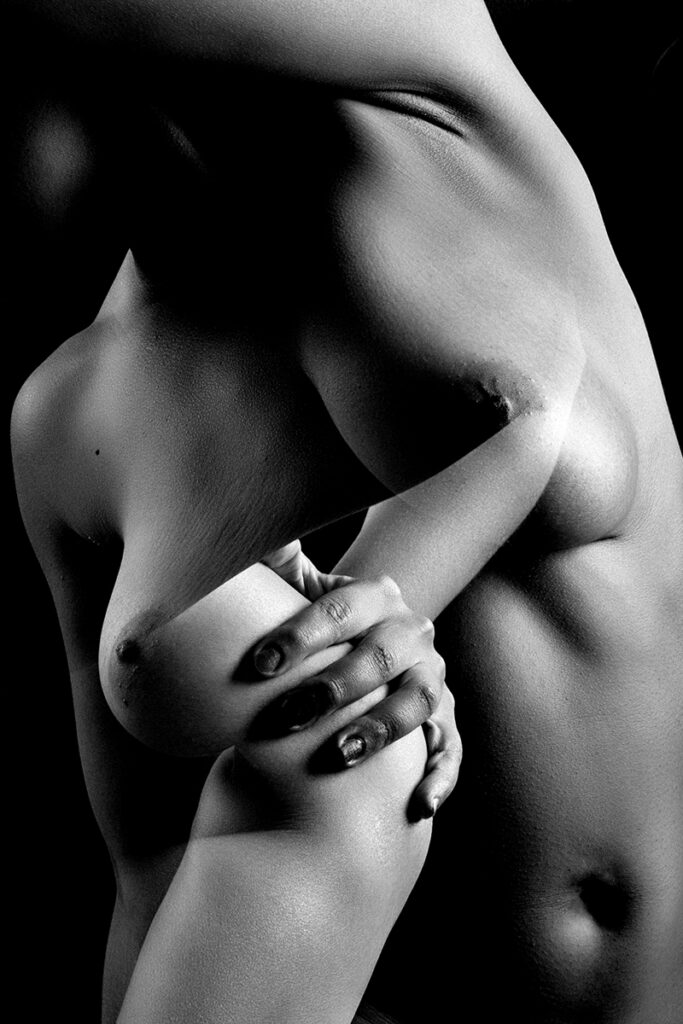
Coming home to pleasure, power, and presence
Expansion grows from unlocking the armour in our vagina, hips, and abdominal area – with an open mouth. This is how we reclaim our birthright: a life of pleasure, feminine power, and presence.
When our inner waters flow freely, the ripple extends through the spine and into the rest of the body and life. Spirals and circles – nature’s sacred patterns – guide that flow. Water doesn’t get stuck. Neither should we.
Touch takes us deeper still. Often, we think we’re fine until we touch ourselves with awareness. Then the truth surfaces.
We are born with:
the power in our hands,
the fire in our breath,
the waters in our hips,
and the animal in our spine.
No outside method can give us what our own bodies already know. The best teacher is time – undivided attention and undisturbed space with ourselves.
When we dance to feel, to heal, we remember. We think through our bodies. We download what we’ve always known. The body brings its wisdom to the surface, showing us how to live our truth.
We remember what to do.
We remember how to do it.
We remember who we are, where we are, and why we are.
And deeper still, we remember that beneath the warrior’s armour – the forced effort, the chaos, the silence – lives the wild woman’s capacity for love. Love of our bodies, our lineage, our pleasure. That love is our birthright. Unarmouring is how we come home to it.
~~
Nikhita Winkler is a dancer, ritual artist, and coach whose somatic journey bridges movement, voice, and empowerment. From a lifetime in dance teaching and performing to guiding women in embodied ritual, her work evolved into coaching, where the body became the gateway to self-trust, clarity, and inner power. Her writing and public speaking journey took flight around 2021, and in 2023, she became a semifinalist in the World Championship of Public Speaking. Today, she teaches women to rise into magnetic presence, weaving somatic practices with storytelling to unlock unshakable confidence, authentic expression, and a voice that leads with impact.
Follow Nikhita on Instagram @nikhita.winkler.